Can You Eat Your Favorite Foods and Still Lose Weight?
Yes, for most people. How energy balance, flexible dieting and smart portions let you keep favorite foods while losing weight, plus why protein and fiber help.
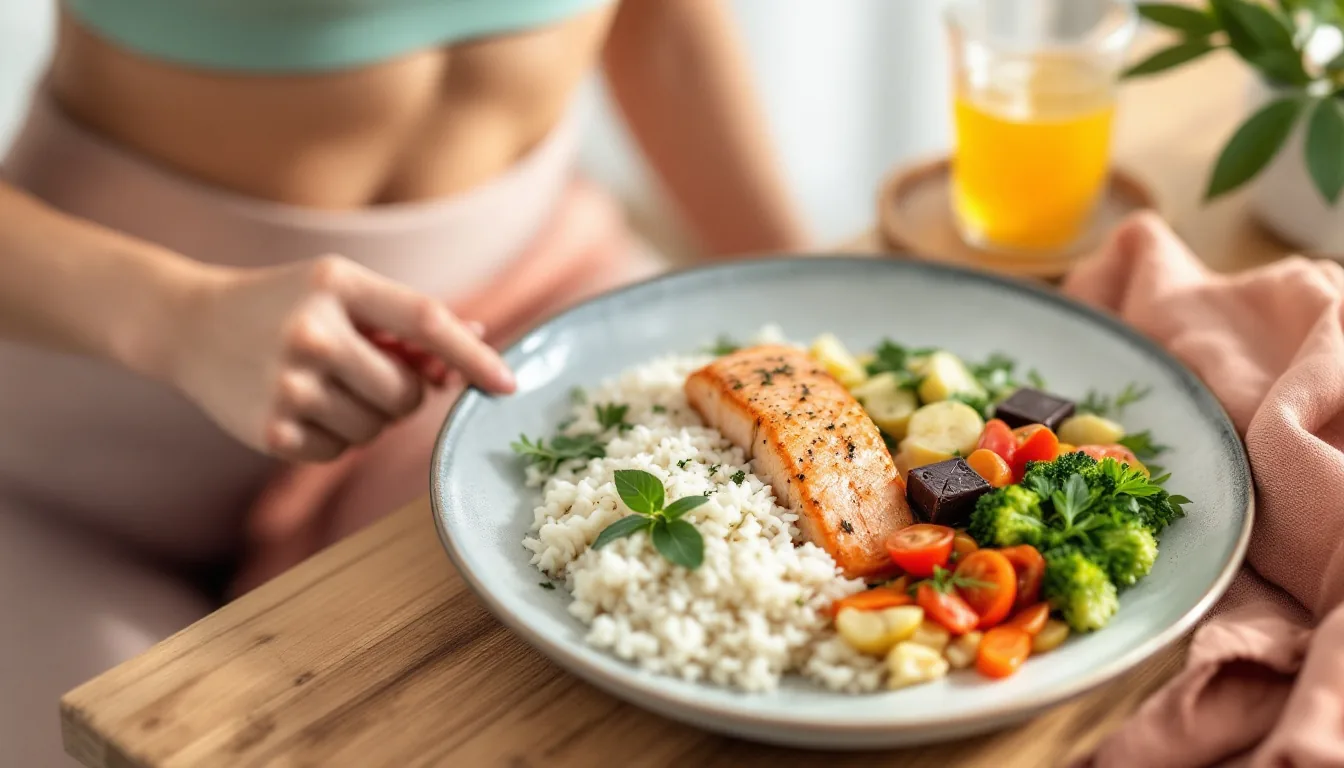
Yes, for most people you can keep the foods you love and still lose weight. This article explains why, what the research says about flexible versus strict dieting, and the portion, protein and fiber habits that make it work. It’s for anyone who has quit a diet because it banned everything they enjoy.
Weight loss comes down to energy balance
Your weight changes based on the balance between the energy you take in from food and drink and the energy you use through metabolism, daily movement and exercise. When you consistently take in a bit less than you use, your body draws on stored energy, including fat. A slice of cake doesn’t cause weight gain on its own, and a salad doesn’t cause weight loss on its own. The overall pattern does.
The Academy of Nutrition and Dietetics takes the same view. Its position paper on healthy eating states that the overall pattern of what you eat is the most important focus, and that all foods can fit when eaten in moderation, with appropriate portions, alongside physical activity. It also warns that labeling individual foods as “good” or “bad” is overly simplistic and can encourage unhealthy eating behaviors (Freeland-Graves & Nitzke, 2013).
How much energy you need depends on your age, height, weight and how active you are, so there’s no single number that suits everyone. The NIH’s free Body Weight Planner can give you a personal estimate. Whatever approach you take, a small deficit is enough. The CDC notes that people who lose about 1 to 2 pounds a week are more likely to keep it off than people who lose weight faster. Don’t drop below 1,200 calories a day unless a doctor is supervising you.
Why flexible dieting tends to beat strict rules
Researchers separate two styles of controlling what you eat:
- Rigid control: all-or-nothing rules, banned foods and strict meal plans. One slip often feels like total failure.
- Flexible control: eating smaller amounts of favorite foods, balancing a big meal with lighter ones, and adjusting rather than quitting.
In a large analysis that included data from more than 54,000 people in a weight-loss program, rigid control was linked with more frequent and severe binge eating and a higher BMI. Flexible control was linked with less binge eating, a lower BMI and a higher chance of successful weight loss over a year (Westenhoefer et al., 1999). That’s an association, not proof of cause, but it suggests strict rules often backfire.
A small randomized trial tested the two styles head to head. Participants ate about 20% fewer calories for 10 weeks, either on a fixed meal plan or with free choice of foods within their targets. Both groups lost similar amounts of weight and fat (Conlin et al., 2021). The study was small (23 people who already lifted weights), but it supports a simple idea: you don’t need a rigid menu to lose weight.
What about the 80/20 rule?
The 80/20 rule is a popular way to put flexible eating into practice: about 80% of your food comes from nourishing choices like vegetables, fruit, whole grains, beans, lean proteins and dairy, and the other 20% leaves room for favorites. No study has tested that exact ratio, so treat it as a rule of thumb, not a formula.
Two ways to use it:
- By meals: if you eat about 21 meals a week, roughly four of them can include a favorite food without much planning.
- By portion of the day: your treat is part of your daily intake, not extra on top of it. A small dessert after a balanced dinner fits; dessert after every meal usually doesn’t.
Portion strategies that let favorites stay
Portion size has a bigger effect than most people realize. A Cochrane review of 72 studies found that people consistently eat more when they’re served larger portions or use larger packages and tableware. The authors estimated that cutting back on these larger sizes across the whole diet could reduce daily intake by about 144 to 228 calories for UK adults and children (Hollands et al., 2015).
You can use that effect in your favor:
- Plate it. Serve chips, ice cream or cereal into a bowl instead of eating from the bag or tub.
- Buy smaller units. Single-serve packs or a bakery cookie instead of a family-size box.
- Use smaller plates and bowls for the foods you tend to overeat.
- Pair, don’t graze. Have your favorite with or after a meal, when you’re less hungry, rather than as a standalone snack when you’re ravenous.
- Fill half your plate with vegetables or salad so the rest of the meal can include richer foods.
- Upgrade, don’t ban. Add vegetables to pizza, use a thinner crust, or make a smaller batch of pasta and bulk it out with vegetables and chicken.
- At restaurants, share a dessert or ask for half of a large main to be boxed up before you start.
Build meals around protein and fiber
Protein and fiber don’t cancel out treats, but they help you feel full enough that a small portion of a favorite food is satisfying.
Protein. A review in the American Journal of Clinical Nutrition found that higher-protein diets can modestly improve fullness and help preserve lean muscle during weight loss. The authors suggested around 25 to 30 grams of protein per meal (Leidy et al., 2015). In practice, that means including a palm-sized portion of chicken, fish, tofu, eggs, lean meat, Greek yogurt or cottage cheese at each meal. Daily targets and food sources are covered in How Much Protein Do Women Need?.
Fiber. In a 6-month study of 345 adults on calorie-reduced diets, fiber intake was the strongest predictor of weight loss and was linked with sticking to the diet (Miketinas et al., 2019). The Academy of Nutrition and Dietetics recommends about 25 grams of fiber a day for women. Good sources include vegetables, fruit, beans, lentils, oats and whole grains. Increase fiber gradually and drink plenty of water to avoid bloating.
A sample flexible day
| Meal | What it might look like | Where favorites fit |
|---|---|---|
| Breakfast | Oats with Greek yogurt and berries | Mostly nourishing |
| Lunch | Chicken and bean wrap with a big side salad | Mostly nourishing |
| Snack | Apple and a handful of nuts | Mostly nourishing |
| Dinner | Homemade pizza topped with vegetables, plus a side salad | Favorite food, built into a balanced meal |
| Dessert | A small bowl of ice cream | Planned treat |
This is an example, not a prescription. Swap in foods and portions that suit you.
When flexible dieting isn’t the right fit
Tracking food and calories, even flexibly, can be harmful if you have a history of disordered eating. If counting makes you anxious or obsessive, stop and talk to your doctor or a registered dietitian. The same goes if you have a medical condition such as diabetes, where meal timing and carbohydrate intake matter more.
FAQs
Do I have to count calories?
No. Counting can be a useful learning tool for a few weeks, but many people lose weight using portion habits and protein- and fiber-rich meals instead. Pick the method you can stick with.
Will eating sugar stop me losing fat?
Not on its own. Sugary foods are easy to overeat and don’t fill you up much, so keep portions small. Within an overall calorie deficit, an occasional treat won’t stop your progress.
What if I can’t stop at one portion of a certain food?
That’s common. Try buying it in single servings, eating it only when you’re out rather than keeping it at home, or having it after a meal instead of on an empty stomach. If you feel out of control around food often, a registered dietitian can help.
Sources
- Freeland-Graves & Nitzke (2013). Position of the Academy of Nutrition and Dietetics: Total diet approach to healthy eating. J Acad Nutr Diet
- Westenhoefer, Stunkard & Pudel (1999). Validation of the flexible and rigid control dimensions of dietary restraint. Int J Eat Disord
- Conlin et al. (2021). Flexible vs. rigid dieting in resistance-trained individuals seeking to optimize their physiques: A randomized controlled trial. J Int Soc Sports Nutr
- Hollands et al. (2015). Portion, package or tableware size for changing selection and consumption of food, alcohol and tobacco. Cochrane Database of Systematic Reviews
- Miketinas et al. (2019). Fiber intake predicts weight loss and dietary adherence in adults consuming calorie-restricted diets. J Nutr
General information only, not medical advice. Stop if you feel pain, dizziness or shortness of breath, and check with a health professional before starting if you have any concerns.