Losing Weight After Pregnancy: A Realistic, Safe Approach
A realistic guide to postpartum weight loss: timelines, eating while breastfeeding, pelvic floor and diastasis recti care, and easing back into exercise.
This guide covers how to lose weight after having a baby in a way that protects your recovery, your energy and, if you’re breastfeeding, your milk supply. It’s for new moms who want a realistic plan rather than a “bounce back” deadline. Every birth and body is different, so check with your OB-GYN, midwife or doctor before you start exercising or changing how you eat.
A realistic postpartum timeline
Some weight comes off quickly after birth, and the rest takes longer. According to MedlinePlus, from the US National Library of Medicine, most women lose about half of their pregnancy weight by six weeks after giving birth. It suggests six to 12 months as a reasonable window for the rest. If it takes you longer, that’s not a failure. Sleep, feeding, recovery from birth and how much weight you gained all play a part.
The first weeks are for healing, not dieting. MedlinePlus advises waiting until your six-week checkup before trying to slim down. If you’re breastfeeding, it recommends waiting until your baby is at least two months old and your milk supply has settled before cutting calories in any significant way.
Your checkups are the right place to ask about weight and exercise. The American College of Obstetricians and Gynecologists (ACOG) recommends that new moms have contact with their care provider within the first three weeks after birth, followed by a comprehensive postpartum visit no later than 12 weeks (ACOG Committee Opinion 736).
Eating while breastfeeding
Breastfeeding uses extra energy. The CDC recommends an additional 330 to 400 calories a day for well-nourished breastfeeding mothers. Your actual needs depend on your age, body size, activity level and whether you’re exclusively breastfeeding or combining breast milk with formula.
That doesn’t mean you can’t lose weight while breastfeeding. It means going slowly. The Academy of Nutrition and Dietetics calls a gradual loss of about 1 pound a week a safe goal for breastfeeding moms, and notes that eating fewer than 1,800 calories a day may reduce how much milk your body makes. Stress, anxiety and fatigue can also lower milk production.
Practical habits that help:
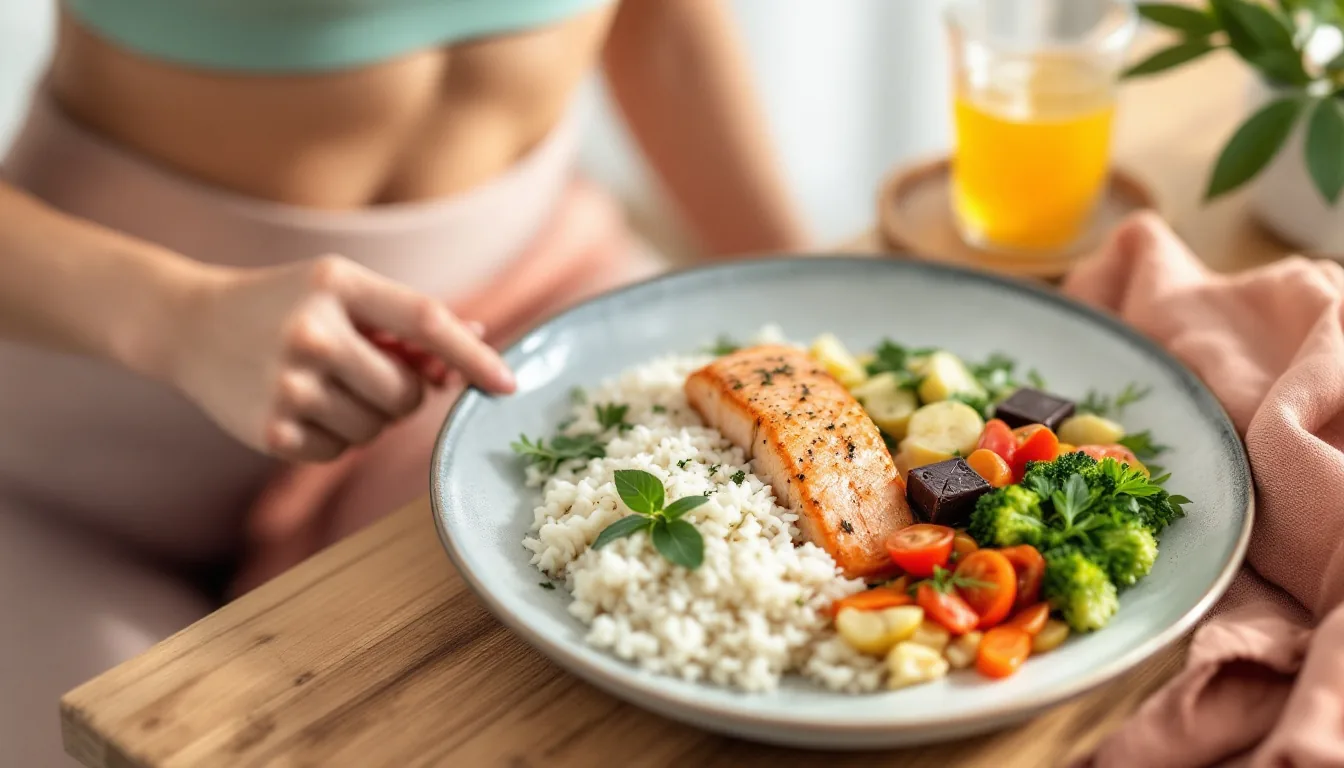
- Eat regular meals. Long gaps tend to lead to grabbing whatever’s nearest when you’re starving.
- Include protein at each meal. Eggs, Greek yogurt, beans, chicken, fish or tofu help keep you full.
- Add fiber. Vegetables, fruit, oats, whole grains, beans and lentils support fullness and digestion.
- Keep easy snacks within reach. Think cheese and crackers, fruit, nuts or yogurt you can eat one-handed.
- Drink to thirst, and keep a water bottle where you usually feed the baby.
If you’re not breastfeeding, the same steady approach applies. Aim for a small calorie deficit rather than a crash diet, and never go below 1,200 calories a day unless a doctor is supervising you.
Start with your pelvic floor
Pregnancy and birth put a lot of strain on your pelvic floor, the muscles that support your bladder, bowel and uterus. ACOG says pelvic floor exercises can be started in the immediate postpartum period (Committee Opinion 804).
The NHS describes a simple routine:
- Squeeze and draw in your back passage as if you’re holding in gas.
- At the same time, squeeze around your vagina and bladder as if you’re stopping the flow of urine.
- Do long holds of up to 10 seconds, then fully relax.
- Do quick squeezes until the muscles tire.
Build up to 10 repetitions of each type, at least three times a day. If you have leaking, a feeling of heaviness or dragging in your vagina, or pelvic pain, talk to your doctor. A pelvic floor physical therapist (physio) can assess you and tailor a plan.
Diastasis recti: what to know
Diastasis recti is a separation between the two sides of your “six-pack” muscle that happens as your belly stretches during pregnancy. According to the NHS, the gap usually goes back to normal by the time your baby is eight weeks old. If there’s still an obvious gap at that point, see your doctor, since it can raise the risk of back problems.
Early on, the NHS advises avoiding sit-ups, planks and high-impact exercise and focusing on regular pelvic floor and deep stomach exercises. ACOG notes that abdominal strengthening, including a “drawing-in” move where you gently pull your belly button toward your spine, has been shown to reduce the gap. A physio can show you how to progress safely to harder core work.
A gradual return to exercise
If you had a healthy pregnancy and an uncomplicated vaginal birth, ACOG says it’s usually safe to start exercising a few days after giving birth, or as soon as you feel ready (ACOG). After a cesarean or a complicated birth, recovery takes longer, so ask your care provider when to begin.
| Stage | Focus | Notes |
|---|---|---|
| First days and weeks | Walking, gentle stretches, pelvic floor and deep core exercises | Short sessions; stop if anything hurts |
| After your postpartum check | Low-impact cardio (brisk walking, stationary cycling, swimming) and light strength training | NHS advises waiting until 7 days after bleeding has stopped before swimming |
| Around 3 months onward | Gradual return to running and high-impact work, if you have no symptoms | Get individual advice first |
The NHS suggests getting advice at your six-week postnatal check before starting high-impact exercise such as running or aerobics (NHS). A widely used UK guideline written by physiotherapists advises against returning to running before three months postpartum and suggests a return between three and six months, provided you have no pelvic floor symptoms.
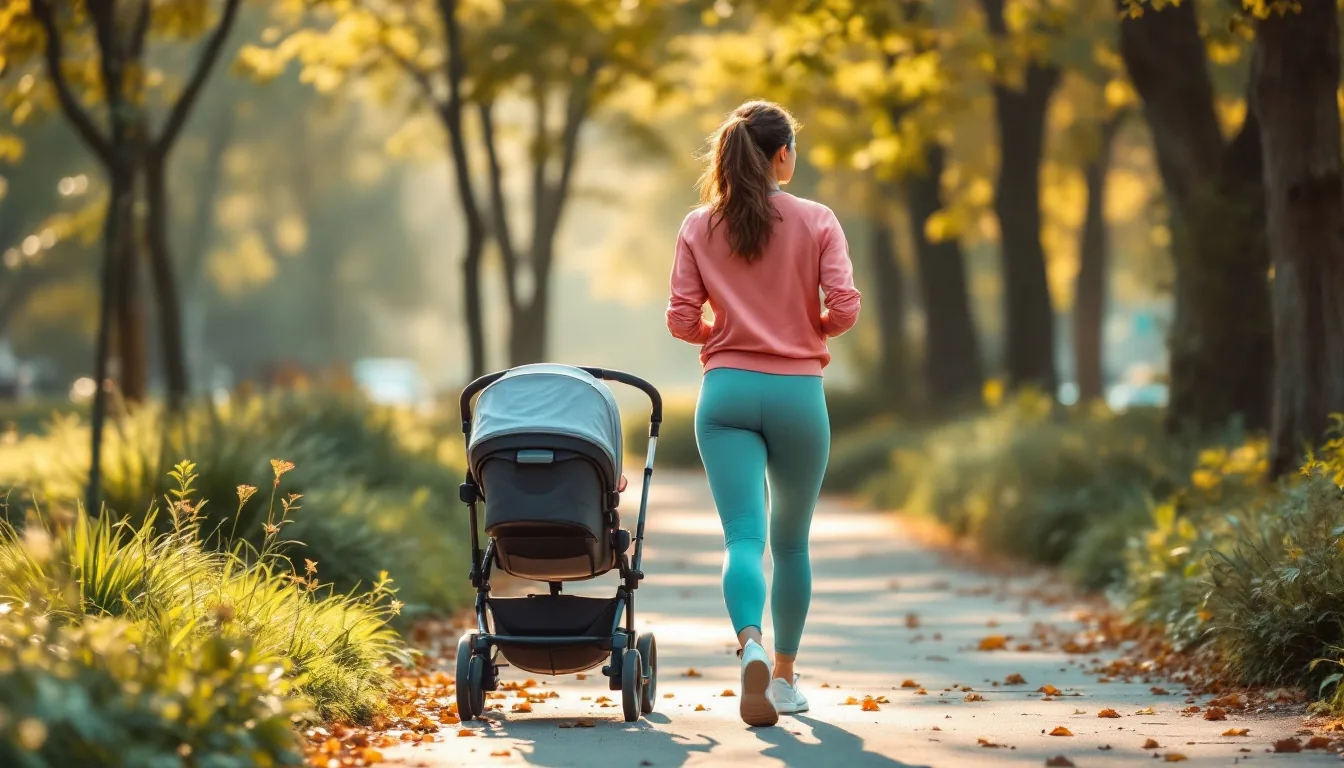
Over time, ACOG recommends working up to at least 150 minutes of moderate-intensity aerobic activity a week, plus muscle-strengthening on at least two days. You can split this into small pieces. Three 10-minute walks a day count.
If you’re breastfeeding, regular aerobic exercise doesn’t affect milk production, milk composition or your baby’s growth, according to ACOG. Feed your baby or pump before a workout, wear a supportive bra and drink water before you start.
Stop and contact your provider if you notice pain, heavier bleeding, leaking or a dragging feeling in your pelvis.
Look after sleep and mood too
Broken sleep and stress make it harder to manage appetite and find energy for exercise, so be realistic about what you can do right now. Physical activity can also play a role in preventing depression after birth, according to ACOG.
Around 1 in 8 women with a recent live birth report symptoms of postpartum depression, according to the CDC. If low mood, anxiety or feeling disconnected from your baby lasts more than a couple of weeks, tell your doctor or midwife. In the US, the National Maternal Mental Health Hotline offers free, confidential support 24/7 by call or text at 1-833-TLC-MAMA (1-833-852-6262).
FAQs
How long does it take to lose the baby weight?
It varies. Many women lose about half by six weeks, and the rest gradually over the following months. Some take a year or longer, especially with broken sleep and a new routine. Steady progress matters more than speed.
Does breastfeeding help you lose weight?
It uses extra energy, but results vary. The Academy of Nutrition and Dietetics notes that weight loss differs between mothers depending on activity, how much weight was gained during pregnancy and how much milk is produced.
Can I do crunches after giving birth?
Start with pelvic floor and deep core exercises first. If you have diastasis recti or pelvic floor symptoms, get checked by your doctor or a physio before adding crunches, planks or heavy lifting.
Sources
General information only, not medical advice. Stop if you feel pain, dizziness or shortness of breath, and check with a health professional before starting if you have any concerns.