6-Minute Abs Workout You Can Do Anywhere
A no-equipment 6-minute abs workout: six moves, 45 seconds on and 15 off, with easier and harder options and a plan for fitting it into your week.

This is a six-minute abs workout you can do on a living room floor, in a hotel room or at the end of a gym session. It uses six bodyweight moves for 45 seconds each with 15 seconds to switch, and every move has an easier and harder option, so it suits beginners and regular exercisers alike.
What six minutes can and can’t do
A short session is a real workout for your core. It builds endurance and control in your abs, obliques and the muscles around your spine. When researchers at San Diego State University ranked 13 ab exercises for an ACE-commissioned study, the lead researcher’s advice was to pick several of the top-ranked moves and do a five-minute session daily. The bicycle crunch, which ranked first for the main ab muscle, and the reverse crunch, third for the obliques, are both in this workout.
What it won’t do is burn belly fat. In a six-week study, people who did ab exercises five days a week improved their ab endurance but saw no change in belly fat or waist size. Fat loss comes from your overall activity and eating habits, and you can’t choose where it happens first.
It also doesn’t replace full-body training. US guidelines recommend at least 150 minutes of moderate activity a week plus muscle-strengthening work on 2 or more days. The good news from the same guidelines is that any amount of activity has some health benefits, so short sessions are worth doing.
When a short session is useful
- Busy days, when a longer workout isn’t going to happen
- Travel, since you need no equipment
- As a finisher after a strength or cardio session
- Building a habit, because six minutes is easy to say yes to
The workout: 45 seconds on, 15 seconds off
Set an interval timer for six rounds of 45 seconds work and 15 seconds rest. Use the rest to get into position for the next move.
| Exercise | Sets | Reps or time | Rest |
|---|---|---|---|
| Dead bug | 1 | 45 sec | 15 sec |
| Reverse crunch | 1 | 45 sec | 15 sec |
| Bicycle crunch | 1 | 45 sec | 15 sec |
| Forearm plank | 1 | 45 sec | 15 sec |
| Side plank | 1 | 45 sec (switch sides halfway) | 15 sec |
| Bird dog | 1 | 45 sec (alternate sides) | 15 sec |
1. Dead bug
Lie on your back, arms pointing at the ceiling, knees bent above your hips. Lower one arm and the opposite leg toward the floor, then switch.
- Keep your lower back gently in contact with the floor.
- Exhale as you reach.
- Move slowly; this isn’t a race.
Easier: move only your legs, tapping one heel down at a time. Harder: straighten your legs further as you lower them.
2. Reverse crunch
Stay on your back with knees bent at 90 degrees above your hips and arms by your sides. Curl your hips a few inches off the floor, then lower.
- Use your abs, not a swing of the legs.
- Keep the lift small.
- Lower over two to three seconds.
Easier: just tilt your pelvis without lifting. Harder: pause for a second at the top.
3. Bicycle crunch
Hands lightly beside your head, bring one elbow toward the opposite knee as the other leg straightens, then switch.
- Rotate through your shoulders, not just your elbows.
- Keep a slow, even pace.
- Don’t pull on your neck.
Easier: keep your feet on the floor and crunch across toward one knee at a time. Harder: pause for one second at each twist.
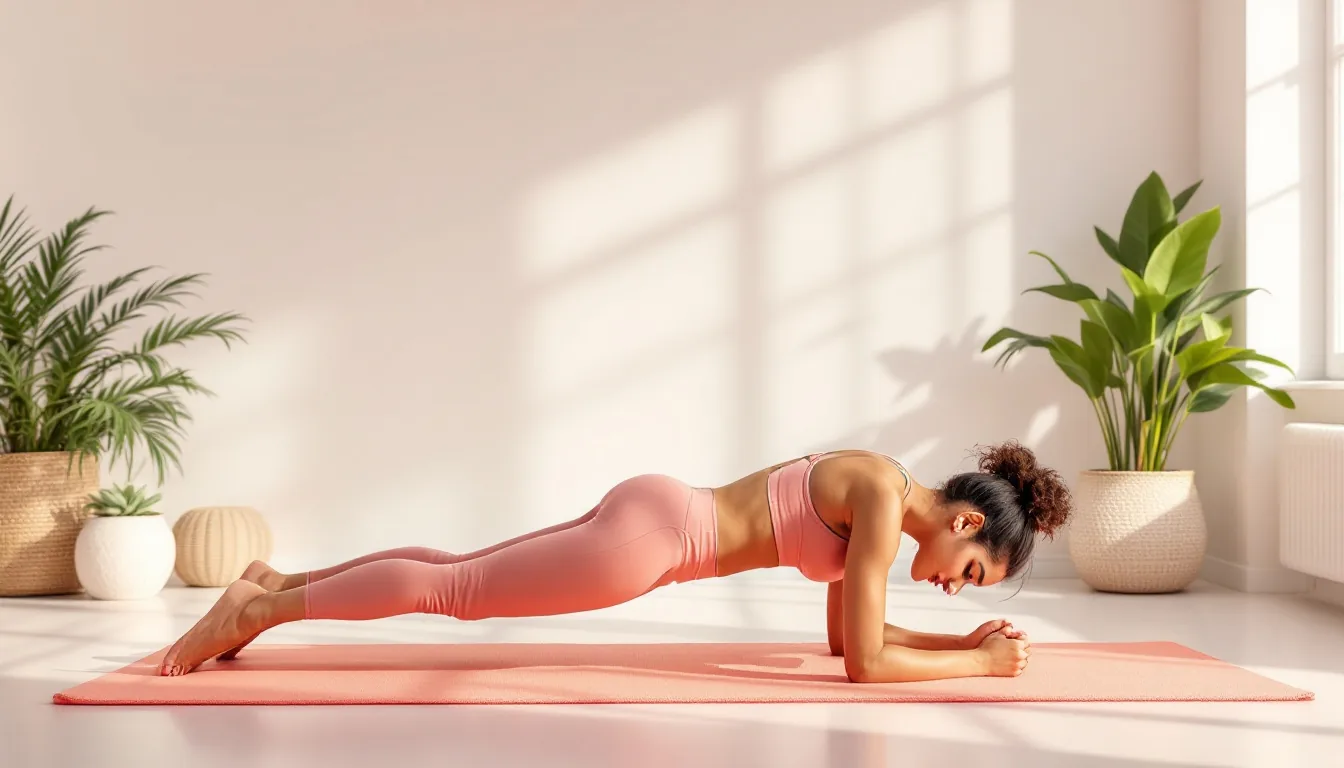
4. Forearm plank
Elbows under your shoulders, body in a straight line from head to heels.
- Squeeze your glutes and brace your stomach.
- Don’t let your hips sag or pike up.
- Breathe steadily.
Easier: drop to your knees, or rest for a few seconds and go again. Harder: slowly lift one foot at a time.
5. Side plank
Lie on your side, elbow under your shoulder, and lift your hips into a straight line. Switch sides at about 22 seconds.
- Stack your hips and shoulders.
- Push the floor away with your forearm.
- Keep your neck in line with your spine.
Easier: lift from your knees instead of your feet. Harder: raise your top leg.
6. Bird dog
On your hands and knees, reach one arm forward and the opposite leg back, pause, then switch.
- Keep your hips level.
- Reach long rather than high.
- Pause for a breath at full reach.
Easier: extend only a leg or only an arm. Harder: bring your elbow and knee together under your body between reaches.
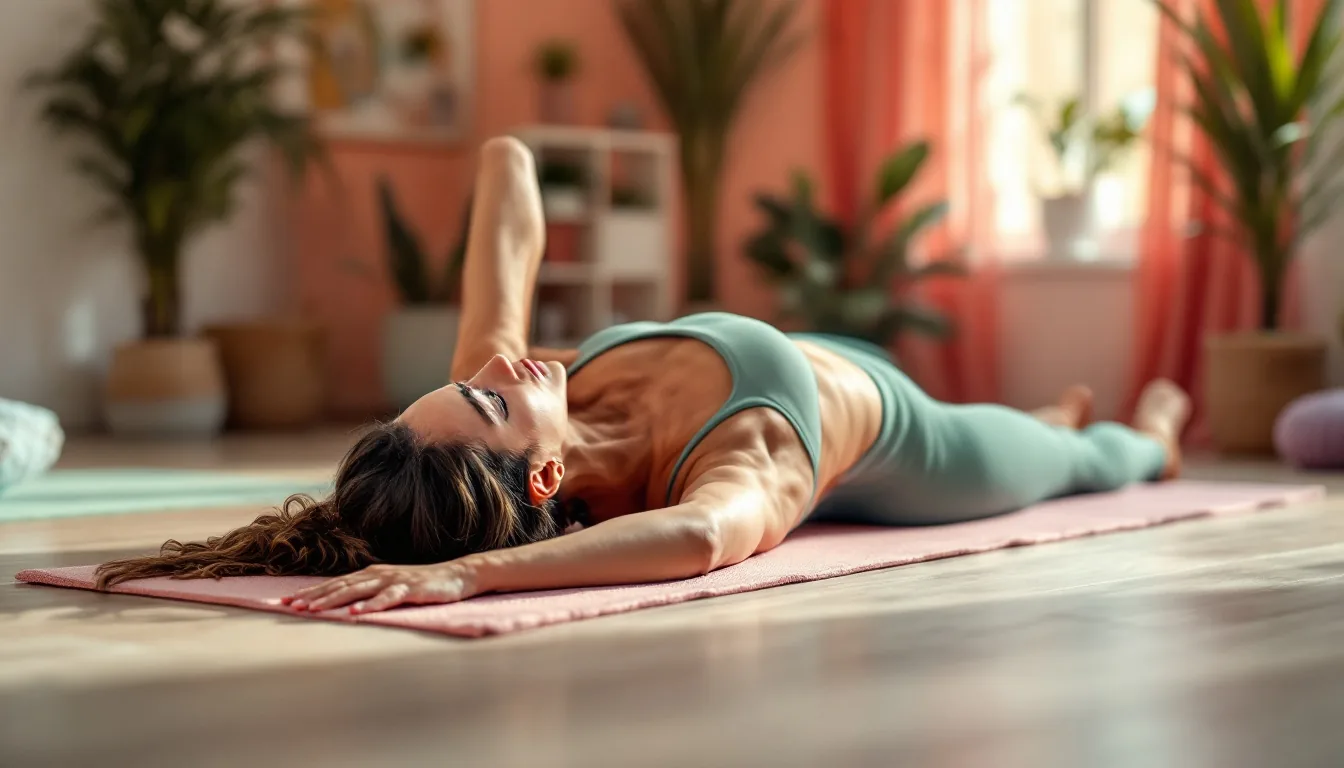
Warm-up: one or two minutes of marching on the spot and a few cat-cow stretches. Cool-down: 30 seconds in child’s pose, then a gentle lying twist each side.
How to fit it into your week
Do it 3–4 times a week. On strength days, add it at the end rather than before heavy lifts, so your core isn’t already tired when you need it most. On walking or cardio days, do it before or after.
Your 4-week progression
- Week 1: three sessions, using easier options wherever you need them.
- Week 2: three or four sessions, standard versions.
- Week 3: switch two or three moves to their harder options.
- Week 4: try 50 seconds on and 10 off, or do two rounds (12 minutes) on one or two days.
If you’re pregnant, recently postpartum or have diastasis recti, check with your doctor or a physical therapist first. Cleveland Clinic advises avoiding crunches and planks with abdominal separation until a specialist guides you, so the dead bug and bird dog may suit you better for now.
FAQs
Can I do this every day?
You can, since it’s short and low intensity, but 3–4 times a week is plenty. If your abs are still sore, take a day off.
Will this give me a flat stomach?
It will make your core stronger. How your stomach looks depends mostly on overall body fat, which changes gradually with consistent activity and eating habits, and on things you can’t control, like genetics.
Is six minutes really enough?
As part of a routine that includes full-body strength training and regular cardio, yes. On its own, it’s a good start, and it’s a lot better than skipping core work entirely.
Sources
- ACE FitnessMatters (2001): New Study Puts the Crunch on Ineffective Ab Exercises
- Vispute et al. (2011), The effect of abdominal exercise on abdominal fat. Journal of Strength and Conditioning Research
- ODPHP: Top 10 Things to Know About the Second Edition of the Physical Activity Guidelines for Americans
- Cleveland Clinic: Diastasis Recti
General information only, not medical advice. Stop if you feel pain, dizziness or shortness of breath, and check with a health professional before starting if you have any concerns.