Glute Workout: 5 Compound Moves to Build Stronger Glutes
Build stronger glutes with squats, hip thrusts, Romanian deadlifts, split squats and step-ups, plus a 4-week progression and protein and recovery basics.
This workout builds your glutes with five compound moves: squats, hip thrusts, Romanian deadlifts, split squats and step-ups. You do it twice a week with dumbbells or a kettlebell, at home or in the gym. It suits anyone comfortable with bodyweight squats and lunges, and each move has an easier and harder option.
What actually builds your glutes
Your glutes grow the same way any muscle does: you challenge them with hard sets, add load or reps over time, and recover well. How they look also depends on genetics and overall body fat, so two people on the same plan can get different results. Muscle growth is gradual, and nobody can promise a set amount of change.
There’s no single magic exercise either. An ACE-sponsored study measuring muscle activity found lunges, step-ups and quadruped hip extensions worked the glutes about as well as squats. And in a 9-week trial using MRI scans, hip thrusts and back squats produced similar glute growth, even though hip thrusts showed higher muscle activity during training. Squats also built more quad muscle.
The bigger factor is volume. The 2026 ACSM position stand links muscle growth to about 10 or more hard sets per muscle group each week, and found that a wide range of loads worked. You don’t need to train to failure. This plan gives your glutes well over 10 weekly sets across two sessions.
The workout
Warm up for 5 minutes: march or walk briskly, then do 10 glute bridges, 10 bodyweight squats and 10 leg swings per side.
| Exercise | Sets | Reps or time | Rest |
|---|---|---|---|
| Goblet squat | 3 | 8–12 | 90 sec |
| Hip thrust | 3 | 8–12 | 90 sec |
| Romanian deadlift | 3 | 8–12 | 90 sec |
| Split squat | 3 | 8–10 per leg | 60 sec |
| Step-up | 3 | 8–10 per leg | 60 sec |
Cool down with a figure-four glute stretch, a kneeling hip flexor stretch and a seated hamstring stretch, about 30 seconds each per side.
How to do each move
Goblet squat. Hold a dumbbell or kettlebell at your chest, feet about shoulder-width apart, toes turned out slightly. Sit down between your hips, letting your knees travel in line with your toes, and keep your chest up. Drive up through your whole foot. Easier: squat to a chair or box. Harder: pause for 2 seconds at the bottom, or progress to a barbell back squat in the gym.
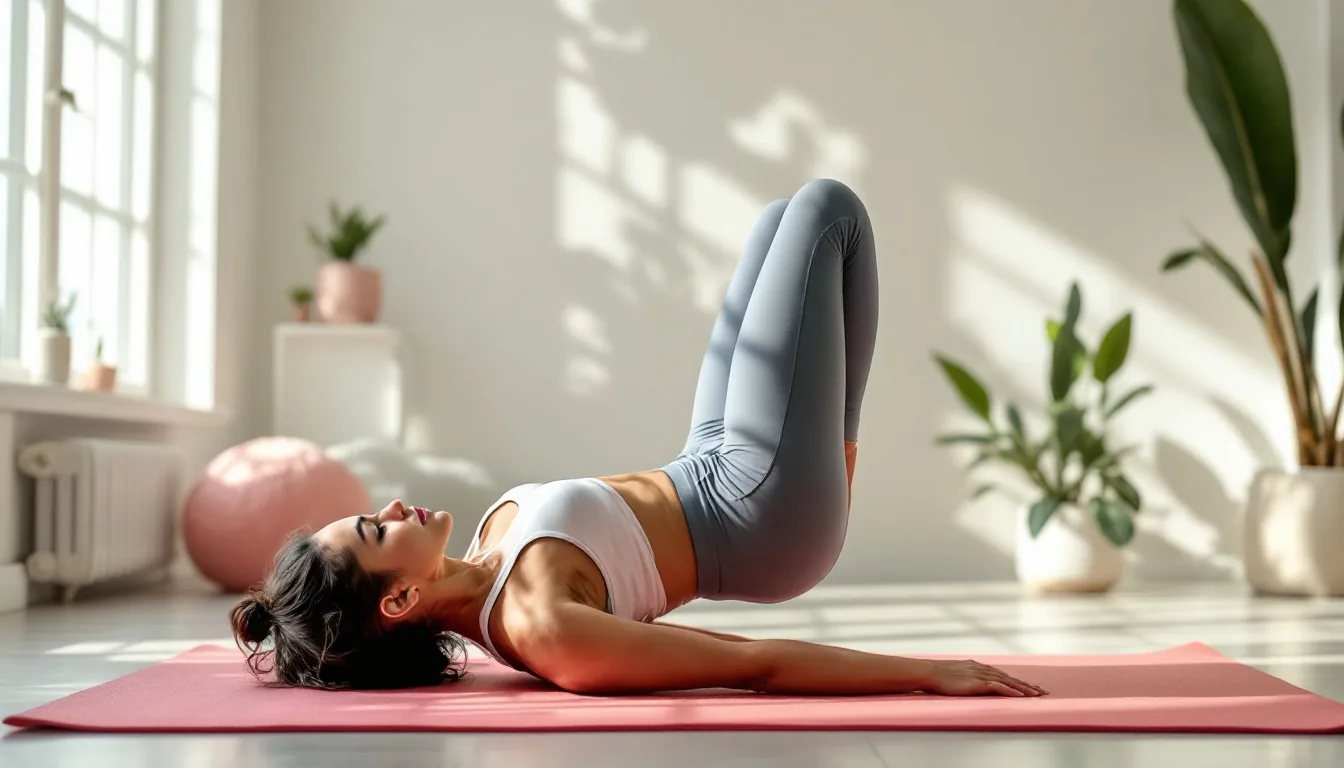
Hip thrust. Rest your upper back on the edge of a bench, with a dumbbell (on a folded towel) across your hips. Plant your feet hip-width apart so your shins are vertical at the top. Push your hips up until your body is in a line from shoulders to knees, tuck your chin and squeeze for one second. Don’t arch your lower back to get higher. Easier: a glute bridge from the floor. Harder: a barbell, or one leg at a time.
Romanian deadlift. Stand holding dumbbells in front of your thighs, knees soft. Push your hips back and let the weights slide close to your legs while your back stays flat. Lower until you feel a strong stretch in your hamstrings, usually around shin height, then drive your hips forward to stand. Easier: a shorter range and lighter weights. Harder: a single-leg version or a barbell.
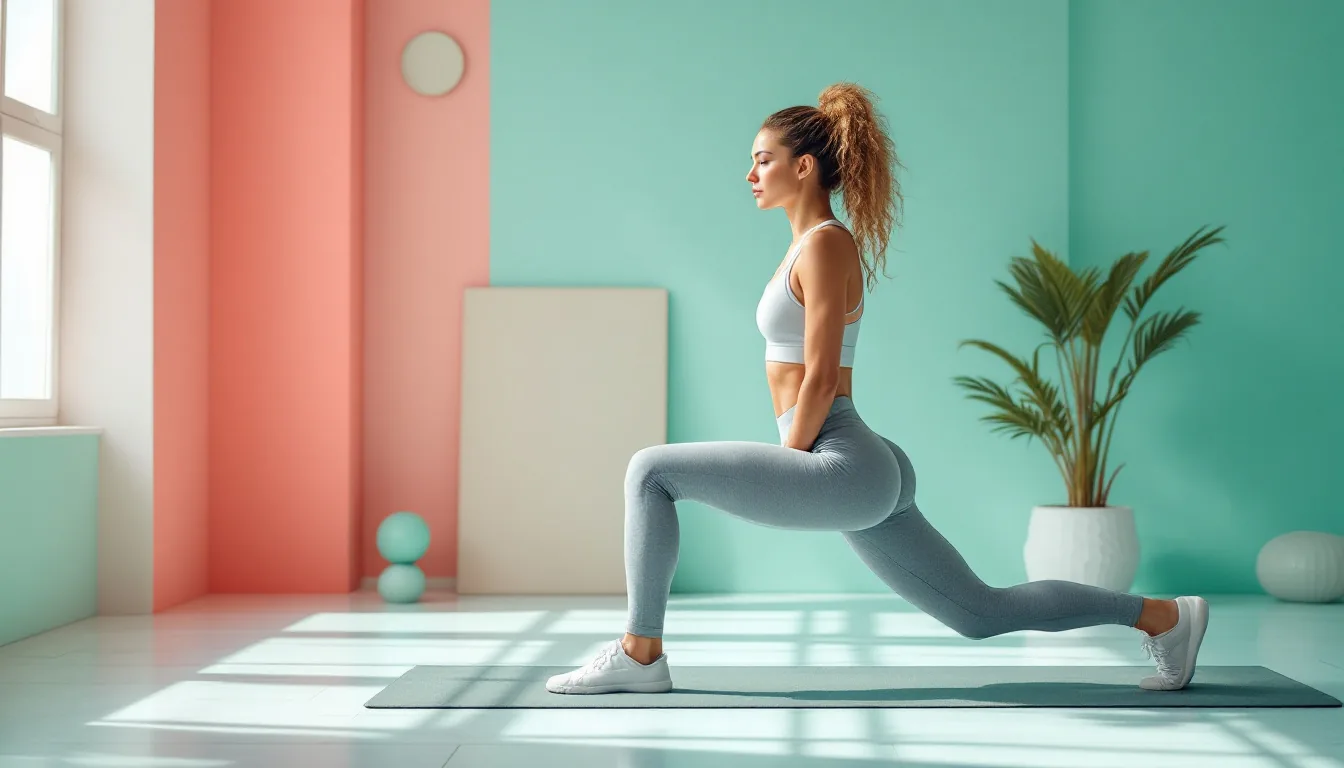
Split squat. Stand in a long staggered stance, holding dumbbells at your sides. Drop your back knee toward the floor, keeping your front knee tracking over your toes. A slight forward lean of your torso puts more work on the front glute. Easier: bodyweight, holding a wall for balance. Harder: rest your back foot on a bench (Bulgarian split squat).
Step-up. Use a step or bench no higher than your knee. Place your whole foot on it and drive up through that leg, using the back leg as little as possible. Lower slowly. Easier: a lower step. Harder: a higher step or heavier dumbbells.
How often and how to progress
Do the workout twice a week with at least two days between sessions, such as Monday and Thursday. Train your upper body on other days so you cover all major muscle groups.
Use double progression. Work within the rep range until you can do the top number on every set with good form, then go up in weight. The 2009 ACSM position stand suggests a 2–10% increase once you can do one or two reps more than your target. Each set should end with about 1 to 3 reps left in the tank.
| Week | Focus |
|---|---|
| 1 | 2 sets of each move with a moderate weight. Stop with 3 reps in reserve and focus on form. |
| 2 | Full 3 sets. Work closer to 2 reps in reserve. |
| 3 | Add weight on any move where you hit 12 reps (or 10 per leg) on every set. Add reps on the rest. |
| 4 | Keep adding weight or reps. Add a 2-second pause at the top of hip thrusts and the bottom of squats. |
After week 4, keep using the same rule. Swap one exercise for a similar one every couple of months if you want variety.
Protein and recovery basics
Muscle is built between sessions, not during them.
- Protein. A meta-analysis of 49 studies found that extra gains in lean mass leveled off at around 1.6 g of protein per kilogram of body weight per day. For a 150 lb (68 kg) woman, that’s about 110 g a day, spread over meals with foods like eggs, Greek yogurt, fish, chicken, tofu and lentils. If you have kidney disease, ask your doctor before raising your protein intake.
- Enough food overall. Building muscle is harder in a big calorie deficit. If you’re also trying to lose fat, keep the deficit modest and your protein high.
- Sleep. The CDC recommends that adults get 7 or more hours a night.
- Soreness. Some soreness after a new workout is normal. Sharp pain in your back, hips or knees isn’t; stop that move and see a doctor or physio if it doesn’t settle.
If you have a joint injury, back problems or another health condition, check with a doctor or physio before you start loading these moves.
FAQs
Are hip thrusts or squats better for glutes?
Both work. In the 9-week MRI trial, they built similar glute muscle, and squats also built more quad muscle. Pick the moves you can do well and progress, and keep both in your routine if you enjoy them.
Will lifting heavier make me bulky?
Building noticeable muscle takes months of steady training and eating enough. You control how much you build through your training volume and diet, and the results tend to look athletic rather than bulky.
Can I train glutes every day?
You don’t need to. Two hard sessions a week give you enough weekly volume, and the rest days let your muscles recover and grow.
Sources
- ACE: ACE Lists Best Butt Exercises (Exclusive ACE Research on Gluteus Maximus Training)
- Plotkin et al. (2023), Hip thrust and back squat training elicit similar gluteus muscle hypertrophy, Frontiers in Physiology
- ACSM Position Stand (2026): Resistance Training Prescription for Muscle Function, Hypertrophy, and Physical Performance in Healthy Adults
- Morton et al. (2018), Protein supplementation and resistance training-induced gains in muscle mass and strength, British Journal of Sports Medicine
- ACSM Position Stand (2009): Progression Models in Resistance Training for Healthy Adults
General information only, not medical advice. Stop if you feel pain, dizziness or shortness of breath, and check with a health professional before starting if you have any concerns.