Hip Mobility Exercises: A 10-Minute Routine for Tight Hips
A 10-minute hip mobility routine with 90/90 switches, lunge stretches, hip CARs and a deep squat hold, plus hold times, form cues and a 4-week progression.
This 10-minute routine takes your hips through the movements that long days of sitting tend to skip: rotation, deep bending, and stretching the front of the hip. It mixes active mobility drills with a few longer stretches, and it suits anyone whose hips feel stiff, from desk workers to lifters who want a better squat. You can do it daily or before a lower-body workout.
Why hips get tight
Your hips are ball-and-socket joints built to move in every direction. Most days, though, they spend hours bent at roughly 90 degrees in a chair and rarely rotate or extend fully. Over time, ranges you don’t use tend to feel stiff and awkward, and that can show up as a squat that won’t go deep or a lunge that pulls at the front of your hip.
Mobility work covers two things. Stretching improves how far a joint can move, and active drills train you to control that range with your own muscles. This routine includes both.
How long to hold and how often
The American College of Sports Medicine recommends flexibility exercises for each major muscle-tendon group on at least 2 days a week, totaling about 60 seconds per exercise. The simplest way to hit that is two 30-second holds per side for each stretch. The NHS also suggests doing flexibility exercises at least twice a week and building up gradually.
Twice a week is the minimum. For hips that feel stiff every day, a short daily session is a reasonable target, since it’s gentle and needs no recovery time.
Stretch to the point of mild tension, never pain, and breathe slowly through each hold. If you have a hip injury, hip or groin pain, or have had a hip replacement, check with your doctor or physio before starting, as some of these positions may not suit you. The same applies if you’re pregnant or have recently given birth.
Mobility before a workout: does it hurt performance?
You may have heard that static stretching before exercise makes you weaker. A 2016 systematic review found the effect depends on dose: holding a stretch for 60 seconds or more per muscle group was linked with larger short-term performance drops (about 4.6% on average) than holds under 60 seconds (about 1.1%). The authors recommended including stretching in a warm-up followed by dynamic activity.
In practice, if you’re using this routine before lifting, keep the longer holds short and finish with the active drills (hip CARs, 90/90 switches and the world’s greatest stretch) plus a couple of light warm-up sets of your first exercise. Save the full holds for after training or a separate session.
Warm-up
Walk briskly or march on the spot for 2 minutes, adding a few gentle leg swings forward and back while holding a wall.
The 10-minute routine
Move straight from one exercise to the next. The rest column is for switching sides or positions.
| Exercise | Sets | Reps or time | Rest |
|---|---|---|---|
| Hip CARs (controlled articular rotations) | 1 | 3 slow circles each direction, per leg | None |
| 90/90 switches | 1 | 6–8 per side | None |
| Half-kneeling hip flexor stretch | 2 | 30 sec per side | 10 sec |
| World’s greatest stretch | 1 | 4 per side | None |
| Frog stretch with rock-back | 1 | 8–10 slow rocks | None |
| Figure-four stretch | 2 | 30 sec per side | 10 sec |
| Deep squat hold | 2 | 20–30 sec | 15 sec |
Form cues and options
Hip CARs. Stand tall holding a wall or chair, lift one knee to hip height, open it out to the side, then rotate it behind you and back down in the biggest slow circle you can control. Keep your torso still so the movement comes from the hip. Easier: smaller circles, or do them on hands and knees. Harder: no support, and squeeze your standing glute throughout.
90/90 switches. Sit with both knees bent to 90 degrees, one leg in front of you and one to the side. Keep your feet on the floor and rotate both knees over to the other side, sitting tall. Easier: lean back on your hands. Harder: hands off the floor, or pause and lean your chest over the front shin.
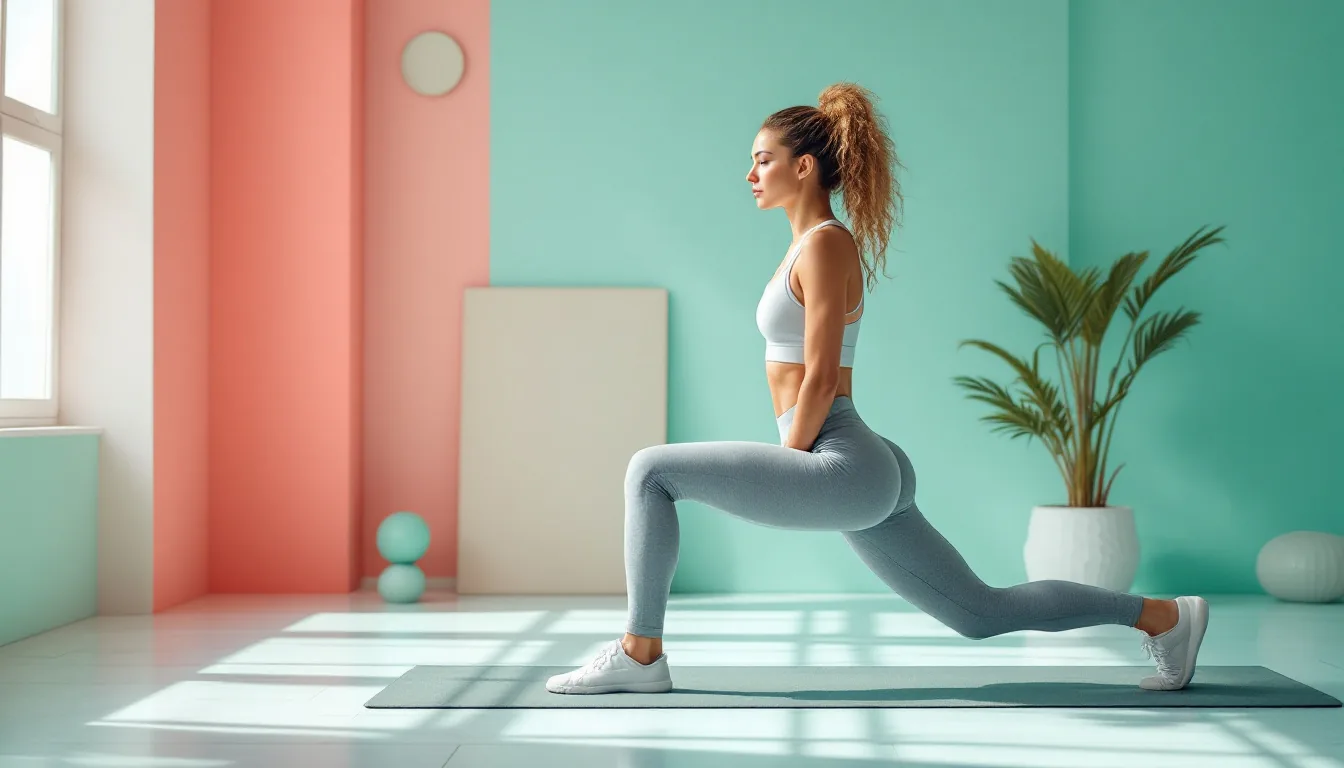
Half-kneeling hip flexor stretch. Kneel on one knee with the other foot in front. Tuck your tailbone slightly and squeeze the glute of the kneeling leg, then shift forward until you feel a stretch at the front of that hip. Don’t arch your lower back to go further. Easier: smaller shift with a cushion under your knee. Harder: reach the same-side arm overhead and lean slightly away.
World’s greatest stretch. From a long lunge, put both hands on the floor inside your front foot. Drop your back knee if you need to, then rotate your chest and reach the inside arm to the ceiling. Return the hand and repeat. Easier: back knee down. Harder: back knee lifted, and add a hamstring stretch by straightening the front leg between reps.
Frog stretch with rock-back. On hands and knees, slide your knees wide with your ankles in line with your knees. Rock your hips slowly back toward your heels until you feel a stretch in your inner thighs, then forward again. Easier: knees less wide, a cushion under them. Harder: rest on your forearms and pause for a few seconds at the back.
Figure-four stretch. Lie on your back, cross one ankle over the opposite knee, then pull the uncrossed thigh toward your chest until you feel a stretch in the outer hip and glute. Keep your head down and shoulders relaxed. Easier: keep the lower foot on the floor. Harder: do it seated in a chair and lean your chest forward over the crossed shin.
Deep squat hold. Feet about shoulder-width, toes turned out slightly, sink down as low as is comfortable with your heels down and chest up. Use your elbows to gently press your knees out. Easier: hold a doorframe or sit onto a low step. Harder: no support, and shift your weight slowly side to side.
Cool-down
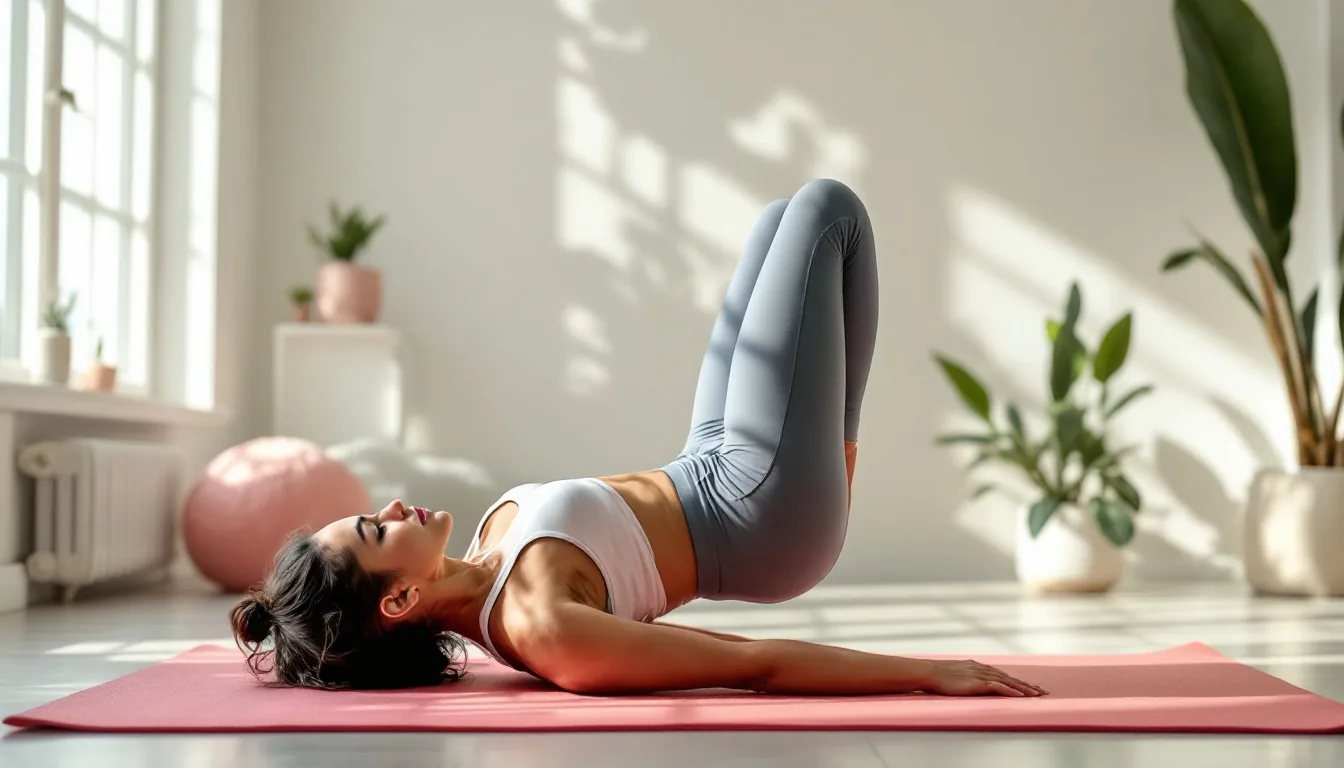
Finish with a minute of slow breathing lying on your back with your knees bent and feet wide, letting your knees fall in toward each other.
Your 4-week progression
| Week | Focus |
|---|---|
| 1 | Do the routine at least 3 days. Use the easier options and the low end of each range. |
| 2 | Aim for 5 days. Full versions where comfortable. |
| 3 | Daily if you like. Top of each range, and try the harder option on two moves. |
| 4 | Keep daily or near-daily practice. Use harder options where you have control, and test your squat depth. |
Progress here means moving through a bigger range with more control, not forcing deeper stretches. After 4 weeks, keep 2 to 3 sessions a week to hold onto what you’ve gained.
Putting it to use
Better hip mobility makes strength work feel smoother. Try it before the Hip Thrust guide workout or the Full Leg Workout for Women, or pair it with the Lower Back Strengthening Exercises routine for a full lower-body maintenance session. If you’re new to the gym, the Beginner Gym Workout Plan for Women has room to slot it in as a warm-up.
FAQs
How long until my hips feel less tight?
It varies from person to person, and there’s no fixed timeline. Most people find movements feel easier with regular practice. Track something simple, like how low you can comfortably squat, so you can see your own progress.
Should stretching ever hurt?
No. Aim for mild tension you can breathe through. Sharp pain, pinching in the front of the hip or pain in the groin is a reason to back off and, if it continues, see a doctor or physio.
Is it better to stretch before or after a workout?
Both can work. Before lifting, keep holds under 60 seconds per muscle and follow with active drills and warm-up sets. After training, or on rest days, you can do the full routine with longer holds.
Sources
- Garber et al. (2011), ACSM Position Stand: Quantity and Quality of Exercise for Developing and Maintaining Cardiorespiratory, Musculoskeletal, and Neuromotor Fitness in Apparently Healthy Adults, Medicine and Science in Sports and Exercise
- Behm et al. (2016), Acute effects of muscle stretching on physical performance, range of motion, and injury incidence in healthy active individuals: a systematic review, Applied Physiology, Nutrition, and Metabolism
- NHS: Flexibility exercises
General information only, not medical advice. Stop if you feel pain, dizziness or shortness of breath, and check with a health professional before starting if you have any concerns.