Full Leg Workout for Women: Quads, Hamstrings and Calves (Gym and Home Versions)
A full leg workout for quads, hamstrings and calves, with gym and home versions, knee-friendly options, form cues and a 4-week progression.
This workout trains your whole lower leg chain: quads on the front of your thighs, hamstrings on the back and calves below the knee. There’s a gym version and a home version built on the same six movement patterns, plus knee-friendly swaps if squats and lunges tend to bother you. It works for beginners and intermediates.
How the workout is built
Each version covers six slots: a squat, a hip hinge, a single-leg move, a hamstring curl, a quad-focused move and a calf raise. Hamstrings get two slots because they work at both the hip and the knee. The home version uses higher reps, since your weights are probably lighter. That’s a fair trade: the 2026 ACSM position stand found that light and heavy loads built similar muscle when sets were hard, and that home-based training improved strength.
Leg training builds muscle and strength. It won’t slim your thighs specifically, because you can’t target fat loss to one area; that comes from overall activity and eating habits.
Gym version
| Exercise | Sets | Reps or time | Rest |
|---|---|---|---|
| Leg press | 3 | 8–12 | 90 sec |
| Romanian deadlift | 3 | 8–12 | 90 sec |
| Reverse lunge | 3 | 8–10 per leg | 60 sec |
| Seated or lying leg curl | 3 | 10–12 | 60 sec |
| Leg extension | 2 | 12–15 | 60 sec |
| Standing calf raise | 3 | 12–15 | 45 sec |
Home version
| Exercise | Sets | Reps or time | Rest |
|---|---|---|---|
| Goblet squat | 3 | 12–15 | 60 sec |
| Single-leg Romanian deadlift | 3 | 10–12 per leg | 60 sec |
| Reverse lunge | 3 | 10–12 per leg | 60 sec |
| Sliding hamstring curl | 3 | 8–10 | 60 sec |
| Wall sit | 2 | 30–45 sec | 60 sec |
| Single-leg calf raise on a step | 3 | 10–15 per leg | 45 sec |
Warm up for 5 minutes with brisk walking or cycling, then 10 bodyweight squats, 10 glute bridges and 10 leg swings per side. Cool down with quad, hamstring and calf stretches, about 30 seconds each per side.
How to do each move
Leg press (gym). Place your feet hip-width apart in the middle of the platform. Lower until your knees are bent to about 90 degrees, or as far as you can without your lower back lifting off the pad, then press through your whole foot without snapping your knees straight. Easier: a shorter range. Harder: a 2-second pause at the bottom.
Goblet squat (home). Hold a dumbbell or a loaded backpack at your chest. Sit down between your hips with your knees tracking over your toes and your chest up. Easier: squat to a chair. Harder: take 3 seconds to lower and pause at the bottom.
Romanian deadlift (gym). Hold dumbbells or a barbell in front of your thighs, knees soft. Push your hips back with a flat back, keep the weight close to your legs and lower until you feel a strong hamstring stretch. Stand by driving your hips forward. Easier: lighter weight, shorter range. Harder: pause just below the knee.
Single-leg Romanian deadlift (home). Stand on one leg holding a weight in the opposite hand. Hinge forward as your free leg reaches back, keeping your hips level. Easier: rest your back toes on the floor for balance. Harder: go heavier or slower.
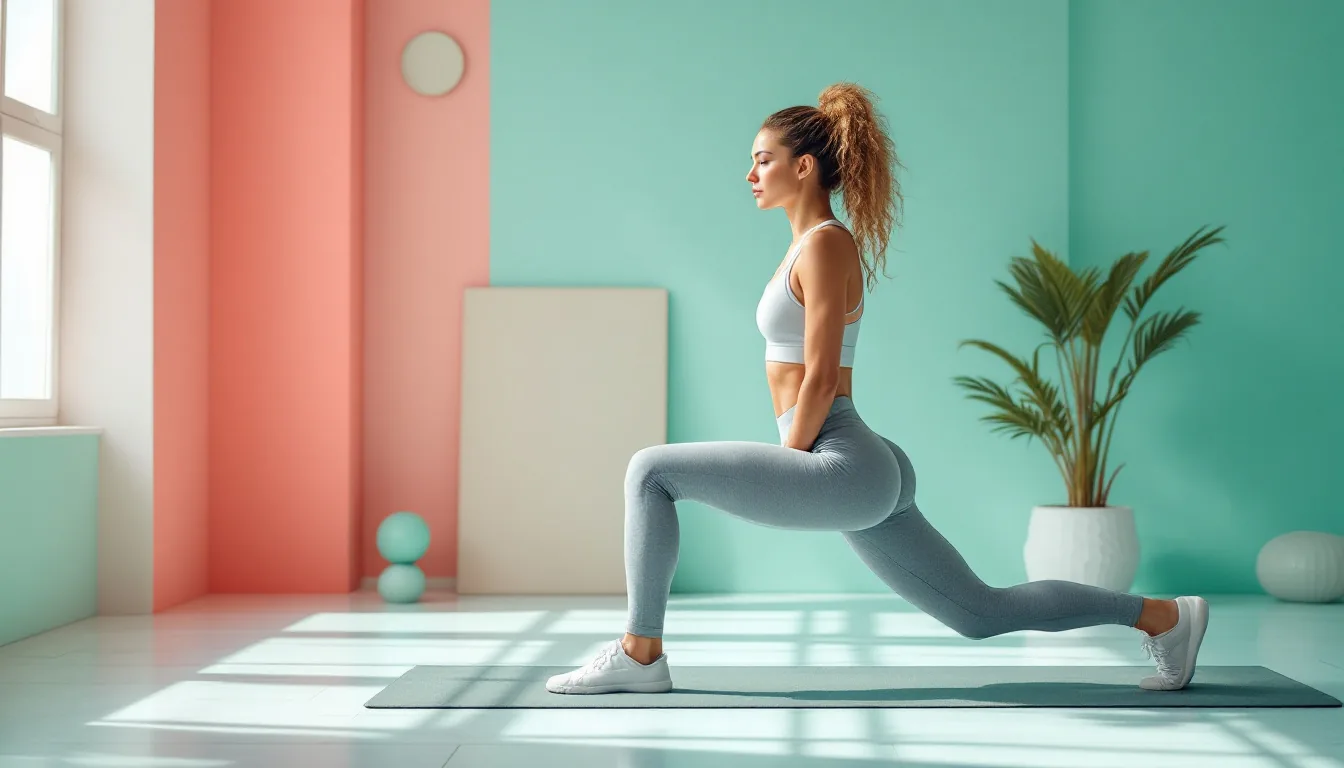
Reverse lunge (both). Step one foot back and lower your back knee toward the floor, keeping most of your weight on the front foot. Push through the front foot to return. Easier: hold a wall or chair. Harder: hold dumbbells, or stand on a low step so you can sink deeper.
Leg curl (gym). Line your knee up with the machine’s pivot point and set the pad just above your ankles. Curl smoothly, pause briefly and lower slowly. Easier: lighter weight. Harder: one leg at a time.
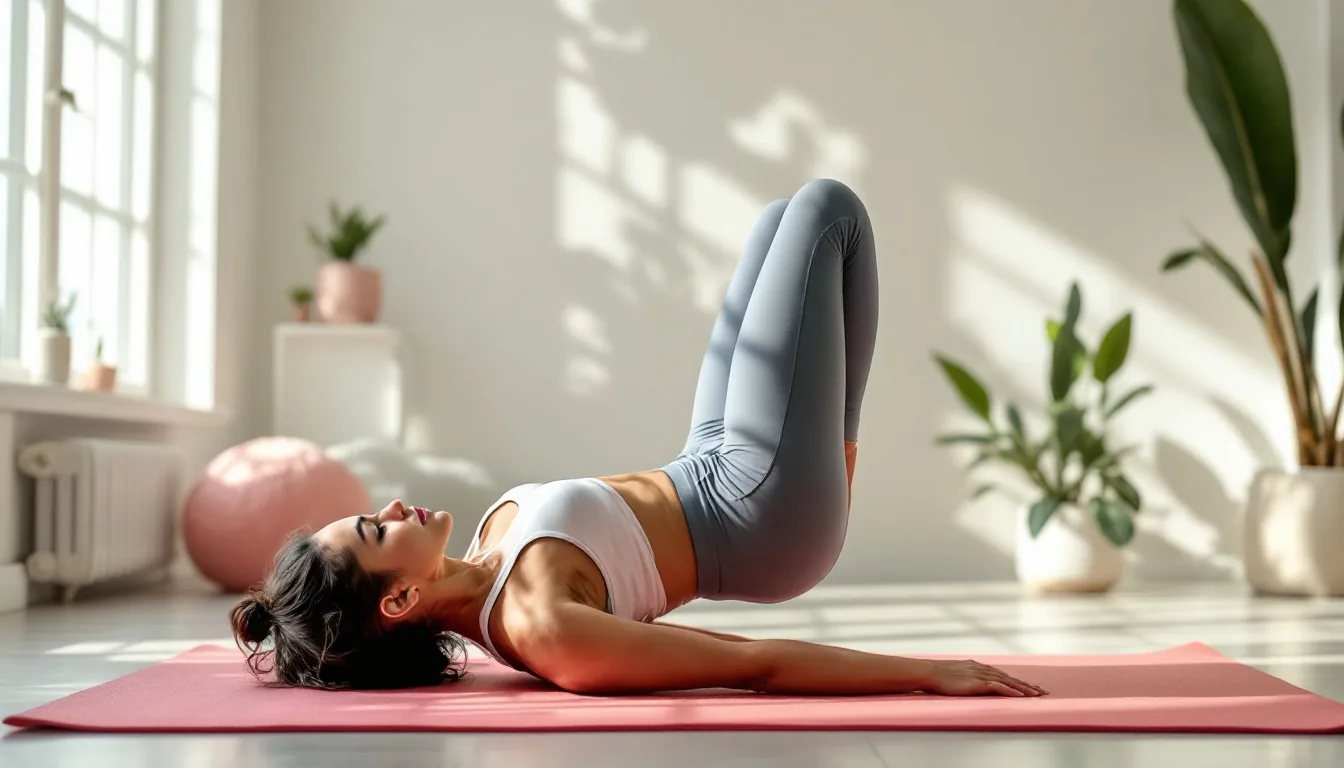
Sliding hamstring curl (home). Lie on your back with your heels on a towel on a smooth floor. Lift your hips into a bridge, slide your heels out slowly, then pull them back in while keeping your hips up. Easier: slide out only, then lower your hips and reset. Harder: one leg at a time.
Leg extension (gym). Set the pad on the front of your lower shins and line your knees up with the pivot. Straighten your legs, squeeze your quads for a second and lower with control. Easier: a shorter, pain-free range. Harder: take 3 seconds to lower.
Wall sit (home). Lean your back against a wall and slide down until your knees are bent, with your knees over your ankles. Hold while breathing steadily. Easier: stay higher on the wall. Harder: sit lower or hold a weight on your thighs.
Calf raises (both). Stand on the edge of a step, holding a rail for balance if needed. Rise as high as you can onto the balls of your feet, pause, then lower your heels below the step for a full stretch. Easier: both legs at once. Harder: hold a dumbbell, or add a set with bent knees to work the deeper calf muscle.
Knee-friendly options
- Knees past toes is normal. In a study of the barbell squat, stopping the knees from moving forward reduced knee load but shifted more stress to the hips and lower back. Let your knees travel naturally over your toes.
- Choose a depth that feels good. A review of squat research concluded that deep squats, learned with good technique and progressive loads, don’t raise injury risk to healthy knees. If deep squats feel uncomfortable for you, squat to a box set at a pain-free height.
- Favor reverse lunges. Many people find stepping back easier on the knees than stepping forward, because the front shin stays more upright and the movement is easier to control.
- Strengthen, don’t just rest. For pain around the kneecap (patellofemoral pain), an international consensus statement recommends exercise therapy that combines hip- and knee-focused strengthening.
Stop any move that causes sharp pain. The NHS advises seeing a GP if knee pain doesn’t improve within a few weeks; get urgent help if your knee is very swollen, locks or you can’t move it. If you have a knee injury or arthritis, check with a physio before you start.
How often and how to progress over 4 weeks
Do the workout twice a week with at least two days between sessions, and train your upper body on other days.
| Week | Focus |
|---|---|
| 1 | 2 sets of each move. Stop each set with about 3 reps in reserve. |
| 2 | Full sets as listed, working to about 2 reps in reserve. |
| 3 | Gym: add weight on any move where you hit the top of the rep range on every set. Home: take 3 seconds to lower each rep, or switch to the harder options. |
| 4 | Add one set to the first two exercises and keep progressing load or reps. |
After week 4, keep the same rule: once you own the top of the rep range, make it harder.
FAQs
Will this workout make my thighs bigger?
Muscle grows slowly, and how much depends on your genetics, training volume and diet. Most people notice firmer, stronger legs long before they notice any change in size.
Can I build leg strength with bodyweight alone?
Yes, especially with single-leg moves, slow lowering and higher reps. Add a backpack with books or water bottles when the bodyweight versions get easy.
Should I do cardio on leg day?
You can. If strength is your priority, lift first and do cardio afterward or on a different day, so your legs are fresh for the harder sets.
Sources
- ACSM Position Stand (2026): Resistance Training Prescription for Muscle Function, Hypertrophy, and Physical Performance in Healthy Adults
- Fry, Smith and Schilling (2003), Effect of knee position on hip and knee torques during the barbell squat, Journal of Strength and Conditioning Research
- Hartmann, Wirth and Klusemann (2013), Analysis of the load on the knee joint and vertebral column with changes in squatting depth and weight load, Sports Medicine
- Collins et al. (2018), Consensus statement on exercise therapy and physical interventions to treat patellofemoral pain, British Journal of Sports Medicine
- NHS: Knee pain
General information only, not medical advice. Stop if you feel pain, dizziness or shortness of breath, and check with a health professional before starting if you have any concerns.