How Much Protein Do Women Need? Daily Targets and Easy Food Sources
Daily protein targets for women in g/kg and g/lb, example targets by body weight, how to split protein across meals, and protein amounts in common foods.
Protein needs depend on your body weight, how active you are and your age. This article gives you the baseline recommendation, the higher ranges used for active women, example daily targets for different body weights, and a table of everyday foods with their protein content. It’s for women who exercise, are trying to lose fat while keeping muscle, or just want to know if they’re eating enough.
The baseline: the RDA
The Recommended Dietary Allowance (RDA) for protein, set by the National Academy of Medicine, is 0.8 grams per kilogram of body weight per day. That’s about 0.36 grams per pound. Harvard’s Nutrition Source gives an example: a 140-pound person needs roughly 50 grams a day to meet it.
Two things to know about the RDA:
- It’s a minimum, not a goal. Harvard describes the RDA as the minimum you need each day. It isn’t set to support hard training.
- There’s plenty of room above it. The same Harvard source notes that protein can make up anywhere from 10% to 35% of your daily calories.
Higher targets for active women
If you lift weights or train regularly, research supports eating more than the RDA. The International Society of Sports Nutrition (ISSN) position stand on protein and exercise recommends:
- 1.4 to 2.0 g/kg per day for most exercising people who want to build or maintain muscle. That’s roughly 0.64 to 0.91 g per pound.
- Higher intakes, around 2.3 to 3.1 g/kg per day, may help resistance-trained people keep more muscle while eating in a calorie deficit.
You don’t need to hit the top of the range. For most active women, the 1.4 to 2.0 g/kg range is a practical place to aim, and the lower end is a good start if you currently eat much less.
Example daily targets
These figures use the RDA and the ISSN range for exercising people. Round to whatever’s easy to remember.
| Body weight | RDA (0.8 g/kg) | Active range (1.4–2.0 g/kg) |
|---|---|---|
| 55 kg (121 lb) | 44 g | 77–110 g |
| 65 kg (143 lb) | 52 g | 91–130 g |
| 75 kg (165 lb) | 60 g | 105–150 g |
| 85 kg (187 lb) | 68 g | 119–170 g |
If you’re carrying a lot of extra weight, using your current body weight can give a target that’s higher than you need. A registered dietitian can help you set a number based on your goal weight or lean mass instead.
How to spread protein across your day
The ISSN position stand also looks at how much protein to eat at once. It suggests:
- About 0.25 g/kg per meal, or 20 to 40 g, of a high-quality protein to best stimulate muscle building.
- Spreading those doses evenly, about every 3 to 4 hours across the day.
In practice, that’s three meals with 25 to 35 g of protein each, plus a snack with some protein if you need more. Many women eat very little protein at breakfast and most of it at dinner, so the easiest fix is usually adding protein to the first meal of the day.
A sample day for a target of about 100 g:
- Breakfast: Greek yogurt with berries and a sprinkle of nuts, plus 2 eggs (around 30 g)
- Lunch: Chicken and bean salad (around 35 g)
- Snack: Cottage cheese and fruit (around 12 g)
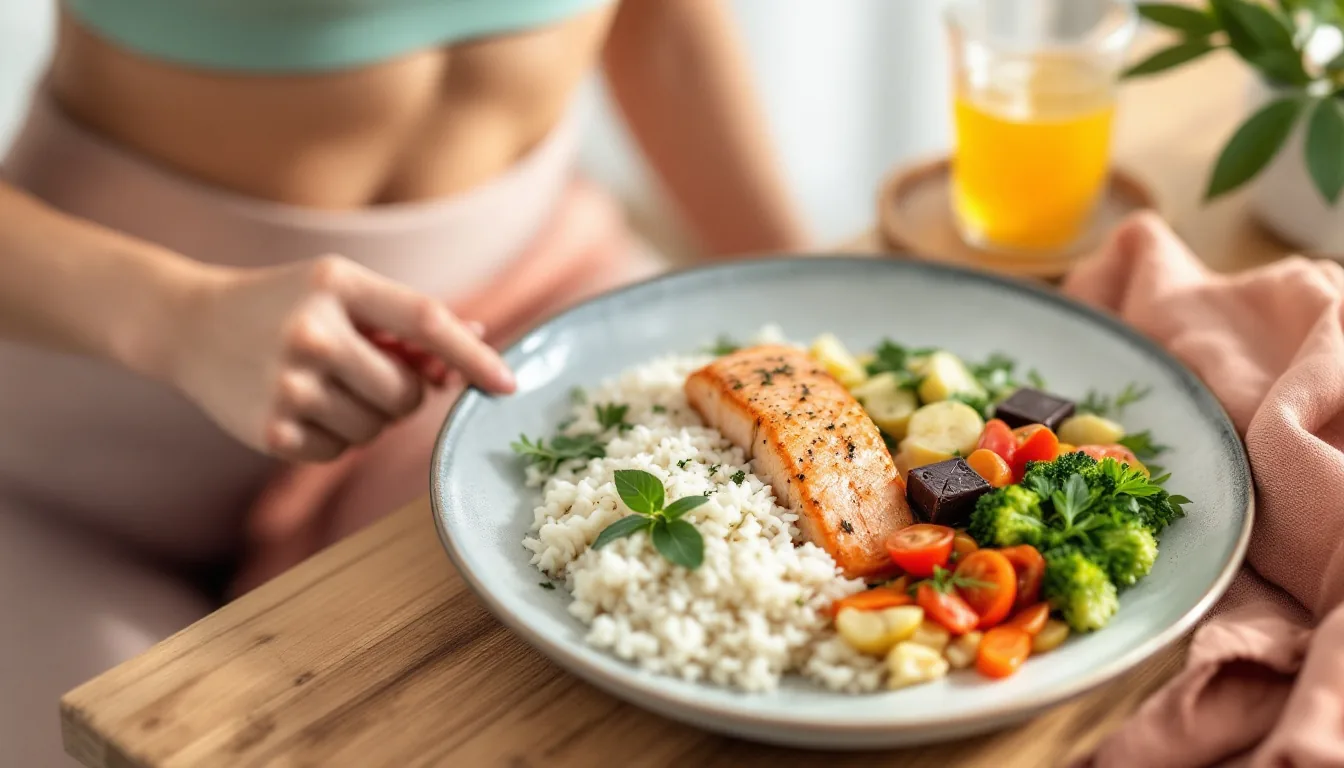
- Dinner: 3 oz salmon with rice and roasted vegetables (around 20 g from the salmon)
Protein in common foods
These figures come from USDA FoodData Central (SR Legacy entries), converted from the per-100 g values to the serving sizes shown. Brands and cooking methods vary, so check labels for packaged foods.
| Food | Serving | Protein |
|---|---|---|
| Chicken breast, roasted, meat only | 3 oz (85 g) | about 26 g |
| Light tuna, canned in water, drained | 3 oz (85 g) | about 22 g |
| Atlantic salmon, farmed, cooked | 3 oz (85 g) | about 19 g |
| Greek yogurt, plain, low-fat | 6 oz (170 g) | about 17 g |
| Firm tofu (made with calcium sulfate) | 100 g | about 17 g |
| Cottage cheese, 2% | 113 g (about 1/2 cup) | about 12 g |
| Edamame, prepared | 100 g | about 12 g |
| Lentils, boiled | 100 g | about 9 g |
| Black beans, boiled | 100 g | about 9 g |
| Milk, 2% | 1 cup (244 g) | about 8 g |
| Egg, whole | 1 large (50 g) | about 6 g |
Tofu varies a lot by brand and firmness. In the same USDA database, another firm tofu entry has about 9 g per 100 g, so read the label.
Plant-based eating
You can meet your protein needs without animal foods, but it takes a little more planning:
- Eat a variety of plant proteins every day. Harvard’s Nutrition Source notes that many plant foods lack one or more essential amino acids, and that eating a range of protein-containing plant foods each day covers your needs.
- Lean on the denser options. Tofu, tempeh, edamame, lentils and beans give you the most protein per serving.
- Aim for the middle or top of your range. The ISSN position stand notes that some plant proteins contain less leucine, an amino acid tied to muscle building, than animal proteins. Larger servings, or combining sources, help close that gap.
Women over 65
Protein needs rise as you get older. The PROT-AGE Study Group recommends that adults over 65 eat at least 1.0 to 1.2 g/kg a day, and 1.2 g/kg or more for those who exercise or are otherwise active. The ISSN position stand adds that older adults may need a larger single dose of protein (it cites research using 40 g of whey protein) to get the same muscle-building response as younger people. Pairing protein with strength work matters too; see strength training for women over 40 for a starter plan.
Protein and weight loss
If you’re trying to lose fat, the ISSN position stand notes that higher protein intakes may help resistance-trained people hold on to muscle while eating in a calorie deficit. That doesn’t mean cutting everything else. Can you eat your favorite foods and still lose weight? explains how protein and fiber fit into a flexible approach. Whatever your goal, don’t drop below 1,200 calories a day unless a doctor is supervising you.
Lifting gives that protein a job to do. If you’re new to it, the beginner gym workout plan is a good place to start.
If you have kidney disease, are pregnant or breastfeeding, or manage a health condition, talk to your doctor or a registered dietitian before making big changes to your protein intake.
FAQs
Do I need protein powder?
No. It’s a convenient option if you struggle to hit your target with food, but the foods in the table above can cover your needs. If you use a powder, treat it as food, not a requirement.
Is it bad to eat more than 2.0 g/kg?
For healthy, active people, the ISSN position stand reports that higher intakes, even above 3.0 g/kg a day, have been studied in resistance-trained people. That doesn’t mean you need that much. Most women do well in the 1.4 to 2.0 g/kg range.
Does protein timing around workouts matter?
Hitting your daily total is the first priority. Spreading protein across meals every 3 to 4 hours, as the ISSN position stand suggests, means you’ll usually have some protein in the hours before and after training anyway.
Sources
- Harvard T.H. Chan School of Public Health, The Nutrition Source: Protein
- Jäger et al. (2017). International Society of Sports Nutrition Position Stand: protein and exercise. J Int Soc Sports Nutr
- Bauer et al. (2013). Evidence-based recommendations for optimal dietary protein intake in older people: a position paper from the PROT-AGE Study Group. J Am Med Dir Assoc
- USDA Agricultural Research Service: FoodData Central
General information only, not medical advice. Stop if you feel pain, dizziness or shortness of breath, and check with a health professional before starting if you have any concerns.