Oblique Workout: 7 Moves for Stronger Sides
A 20-minute oblique workout with side planks, Pallof presses and woodchops, a 4-week progression, and the honest truth about love handles.
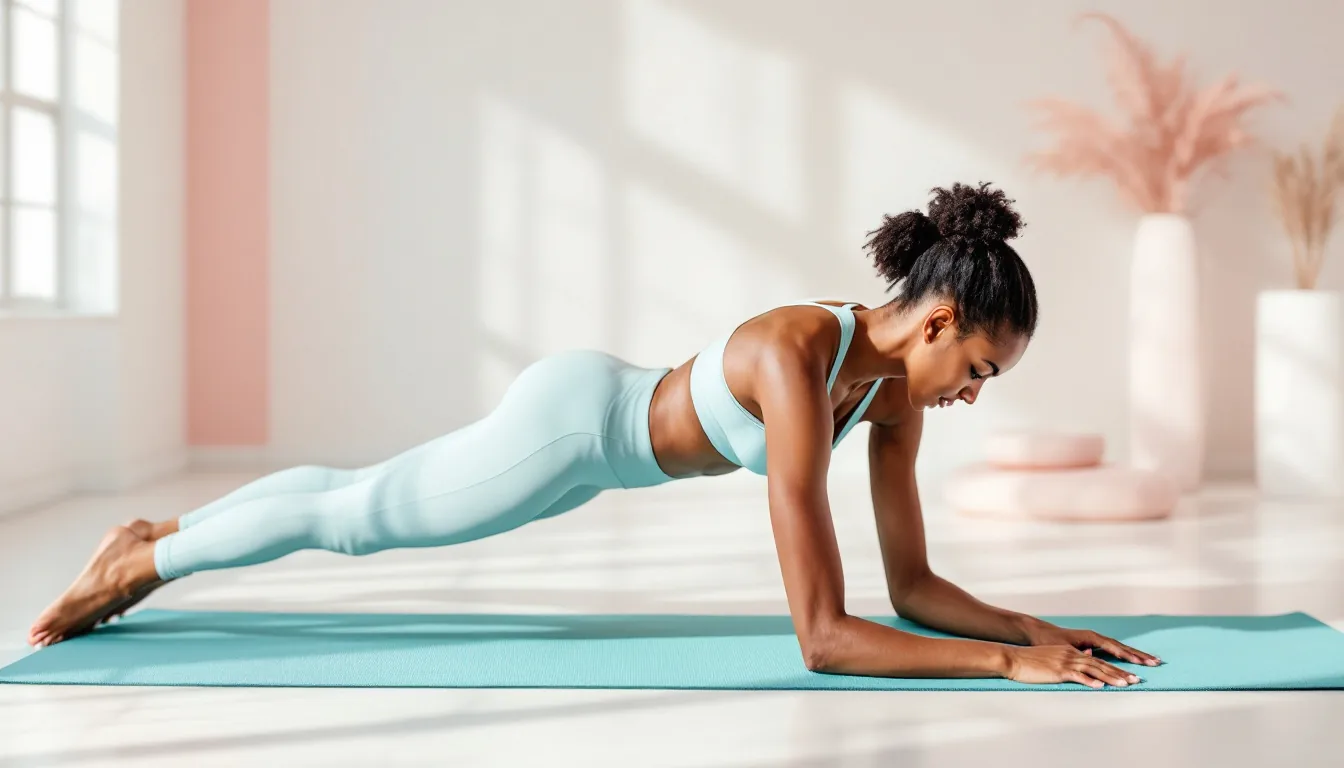
This workout strengthens your obliques, the muscles along the sides of your waist, with seven moves that train them to rotate, bend and resist both. You can do it at home or in the gym with a resistance band and one dumbbell, and every move has an easier and harder option, so it works for beginners and intermediates.
The truth about love handles
Twists and side bends won’t burn fat from your sides. Exercise draws on fat stores across your whole body, not just the ones near the muscle you’re working. In a six-week study, people did seven ab exercises five days a week while keeping their eating the same. Their ab endurance improved, but there was no change in body fat, waist circumference or the skinfold just above the hip bone, which is right where love handles sit.
That doesn’t make oblique training pointless. Strong obliques help you twist, lift and carry with control, and they help keep your spine stable. To reduce fat around your waist, pair strength training with regular cardio and an eating pattern you can stick with. The NHS recommends at least 150 minutes of moderate activity a week plus strength work on 2 or more days. Where you lose fat first isn’t something you get to choose.
What your obliques actually do
Your internal and external obliques run diagonally along your sides. They turn your torso and bend it sideways. Just as importantly, they stop it from twisting or tipping when you don’t want it to, like when you carry a heavy bag in one hand. A good oblique workout trains all of that:
- Resisting movement: side plank, Pallof press, suitcase carry, bird dog
- Controlled rotation: woodchop, bicycle crunch
- Curling: reverse crunch
In an ACE-commissioned study of 13 common ab exercises, the captain’s chair, bicycle crunch and reverse crunch produced the most oblique activity. The last two need no equipment, so they’re both here.
The workout
| Exercise | Sets | Reps or time | Rest |
|---|---|---|---|
| Side plank | 2–3 | 20–30 sec each side | 30 sec |
| Pallof press | 2–3 | 10 each side | 30 sec |
| Half-kneeling woodchop | 2–3 | 10 each side | 45 sec |
| Suitcase carry | 2–3 | 30 sec each side | 45 sec |
| Bicycle crunch | 2 | 10 each side | 30 sec |
| Reverse crunch | 2 | 10–12 | 30 sec |
| Bird dog | 2 | 6–8 each side | 30 sec |
1. Side plank
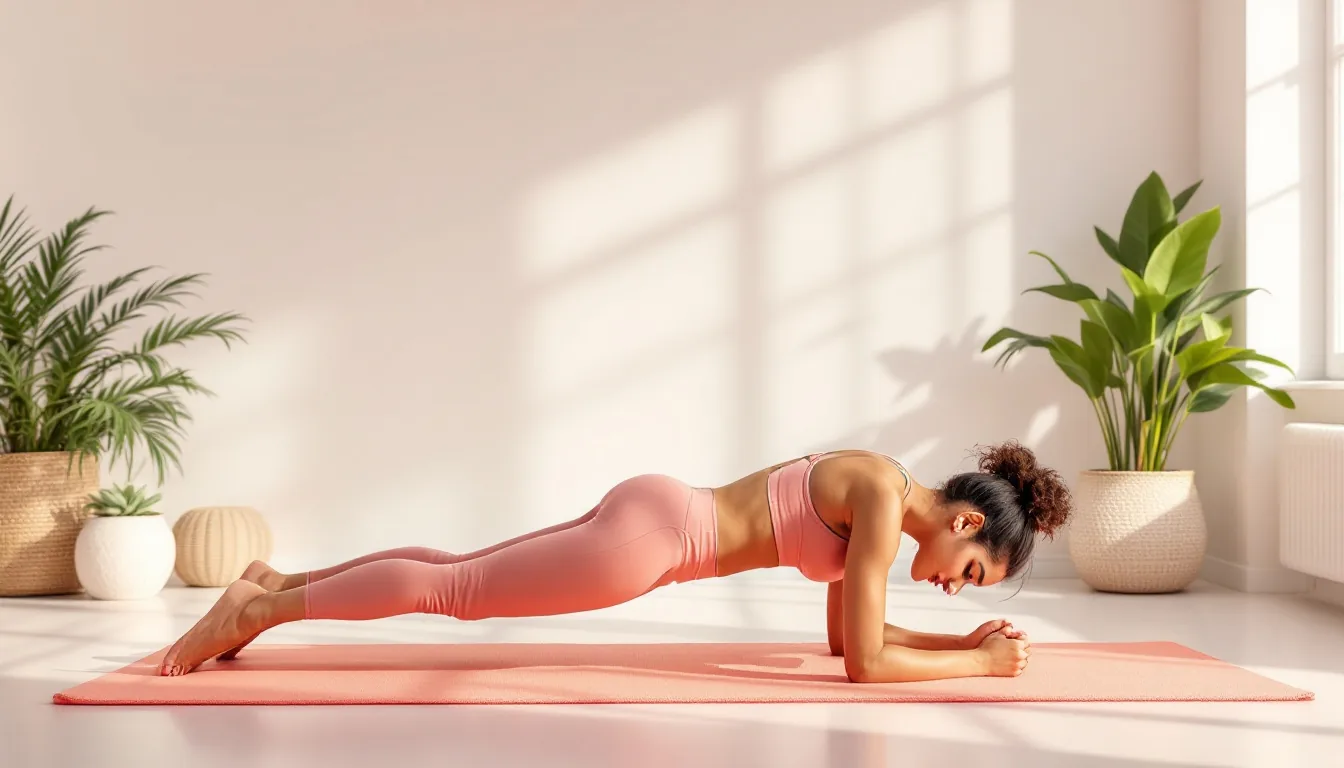
Lie on your side with your elbow under your shoulder, then lift your hips so your body forms a straight line.
- Stack your shoulders and hips, and don’t let your top hip roll back.
- Push the floor away with your forearm.
- Breathe steadily.
Easier: bend your knees and lift from your knees instead of your feet. Harder: raise your top leg, or add slow hip dips.
2. Pallof press
Anchor a band at chest height to one side. Stand side-on to the anchor, feet hip-width apart, holding the band at your chest with both hands.
- Press your hands straight out and hold for two seconds.
- Keep your chest facing forward as the band tries to turn you.
- Bring your hands back slowly.
Easier: half-kneel or step closer to the anchor. Harder: step farther away or hold each press longer.
3. Half-kneeling woodchop
Anchor a band high on one side, or hold a dumbbell in both hands beside one shoulder. Kneel on the knee nearest the anchor, other foot forward.
- Pull diagonally down across your body toward the opposite hip.
- Turn through your ribcage while your hips keep facing forward.
- Exhale as you chop and control the return.
Easier: use a lighter load and a smaller range. Harder: do it standing, or reverse the direction from low to high.
4. Suitcase carry
Hold a heavy dumbbell or kettlebell in one hand and walk slowly.
- Stand tall without leaning toward or away from the weight.
- Keep your shoulders level.
- Take small, steady steps.
Easier: use a lighter weight or march on the spot. Harder: go heavier or walk for longer.
5. Bicycle crunch
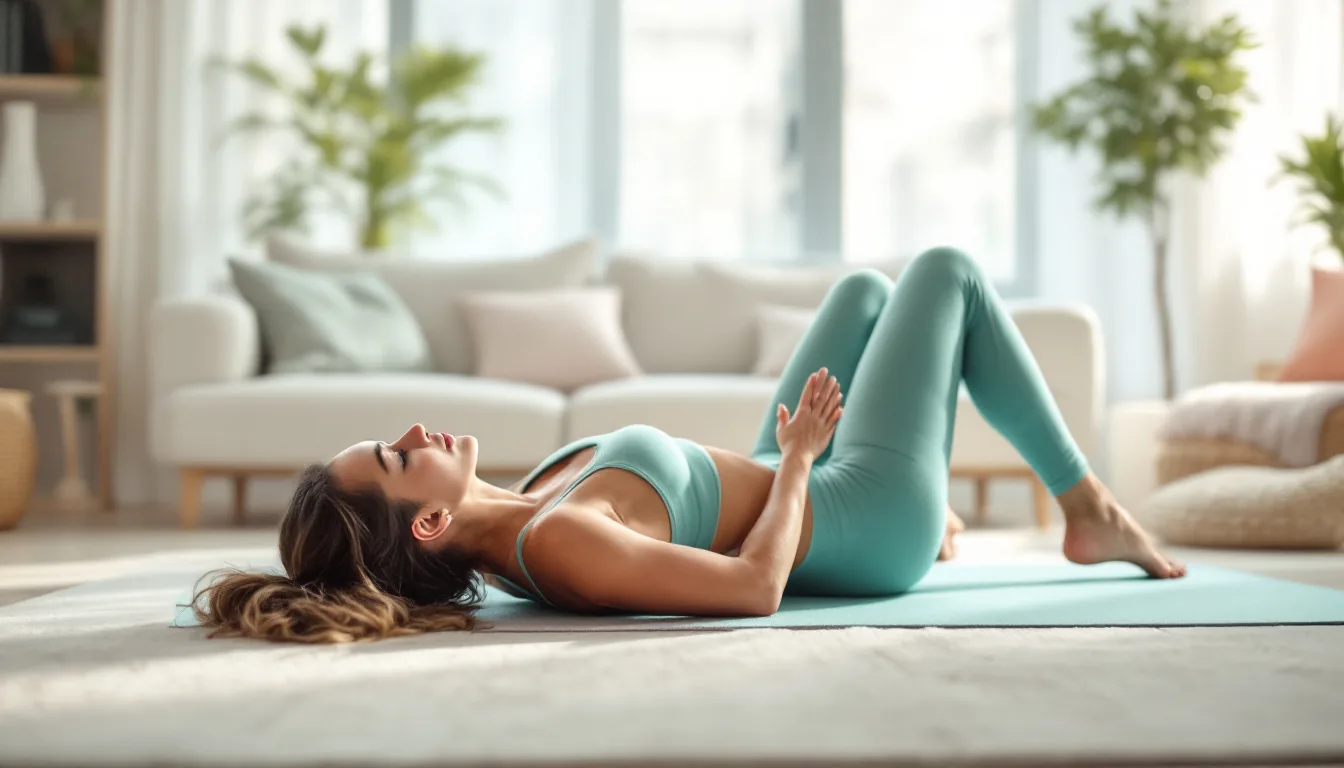
Lie on your back with your hands lightly beside your head and knees lifted. Bring one elbow toward the opposite knee as the other leg straightens.
- Rotate your shoulders, not just your elbows.
- Go slowly instead of pedaling fast.
- Don’t pull on your head.
Easier: keep your feet on the floor and crunch across toward one knee at a time. Harder: pause for one second at each twist.
6. Reverse crunch
Lie on your back with knees bent at 90 degrees above your hips and arms by your sides.
- Curl your hips a few inches off the floor, bringing your knees toward your chest.
- Use your abs, not momentum.
- Lower over two to three seconds.
Easier: keep the movement small, just tilting your pelvis. Harder: pause at the top.
7. Bird dog
Start on your hands and knees. Reach one arm forward and the opposite leg back until they line up with your body, then hold for two seconds.
- Keep your hips level, as if balancing a glass of water on your lower back.
- Reach long rather than high.
- Move slowly.
Easier: extend only the leg or only the arm. Harder: bring your elbow and knee together under your body between reps.
How often to do it
Do this workout 2–3 times a week on non-consecutive days, either on its own or after a strength session. It takes about 20 minutes.
Warm-up: 3–5 minutes of marching, gentle torso rotations, side bends and cat-cow stretches.
Cool-down: a few minutes of child’s pose, a seated side stretch and slow breathing.
Your 4-week progression
- Week 1: 2 sets of each move, using easier options where needed. Hold side planks for 20 seconds.
- Week 2: 2 sets of the standard version. Hold side planks for 30 seconds.
- Week 3: 3 sets of the first four moves, 2 sets of the rest.
- Week 4: 3 sets of the first four moves. Try one or two harder options, or use a stronger band or heavier weight.
If you’re pregnant, recently postpartum or living with back pain, check with your doctor or a physical therapist first, since crunches and side planks may need swapping out. Stop any move that causes pain.
FAQs
Will this workout get rid of my love handles?
Not on its own. It builds strength in your sides, but fat loss happens across your whole body through overall activity and eating habits, and it’s gradual. Stronger obliques will be there when your body fat comes down.
Can I do it without equipment?
Yes. Swap the Pallof press for slow plank shoulder taps (keep your hips still), the woodchop for a slow standing rotation with your arms out in front, and use a full shopping bag or water jug for the suitcase carry.
Are Russian twists good for obliques?
They can be, if you move slowly with a tall spine. Many people rush them with a rounded back, though. Woodchops and Pallof presses train rotation and resisting rotation with more control, which is why they’re used here.
Sources
- Vispute et al. (2011), The effect of abdominal exercise on abdominal fat. Journal of Strength and Conditioning Research
- ACE FitnessMatters (2001): New Study Puts the Crunch on Ineffective Ab Exercises
- ACE Exercise Library: Standing Anti-Rotation Press
- NHS: Physical activity guidelines for adults aged 19 to 64
General information only, not medical advice. Stop if you feel pain, dizziness or shortness of breath, and check with a health professional before starting if you have any concerns.