30-Day Abs Challenge: A Progressive Plan
A 30-day abs challenge with two short core sessions, built-in rest and walking days, a week-by-week progression and honest expectations.

This 30-day abs challenge gives you a clear plan for a month of core training: two short sessions that alternate through the week, rest and walking days built in, and a simple test on day 1 and day 30 so you can see your progress. It’s designed for beginners and needs no equipment.
What to expect in 30 days
Most 30-day challenges promise a flat stomach. This one doesn’t, because a month of ab exercises can’t deliver that on its own. In a six-week study, people did ab exercises five days a week while keeping their eating the same. By the end they could do about 47 curl-ups compared with 32 for a group that didn’t train, but their belly fat and waist size didn’t change.
That’s a fair picture of what you can expect: a stronger, more capable core. You’ll likely hold planks longer, control each move better and feel steadier when you lift and carry things. How your stomach looks depends on your overall body fat, which changes gradually with regular activity and eating habits. As the Mayo Clinic notes, aerobic activity burns fat, while core exercises strengthen the muscles underneath.
How the challenge works
- Session A works the front of your core: resisting arching and curling forward.
- Session B works your sides and resists rotation.
- Walk days mean a 20–30 minute brisk walk or other easy cardio.
- Rest days mean full rest or gentle stretching.
- Test days (day 1 and day 30): hold a forearm plank for as long as you can with good form, stopping when your hips sag, then a side plank on each side. Write down your times.
You’ll never do the same session two days in a row.
Your 30-day calendar
| Week 1 | Week 2 | Week 3 | Week 4 |
|---|---|---|---|
| Day 1: Test, then A | Day 8: B | Day 15: B | Day 22: B |
| Day 2: Walk | Day 9: Walk | Day 16: Walk | Day 23: Walk |
| Day 3: B | Day 10: A | Day 17: A | Day 24: A |
| Day 4: Rest | Day 11: B | Day 18: B | Day 25: B |
| Day 5: A | Day 12: Rest | Day 19: Rest | Day 26: Rest |
| Day 6: Walk | Day 13: A | Day 20: A | Day 27: A |
| Day 7: Rest | Day 14: Walk | Day 21: Walk | Day 28: Walk |
Day 29 is a rest day. On day 30, repeat the test and compare.
Warm-up before each session: 2–3 minutes of marching and cat-cow stretches. Cool-down: child’s pose and a gentle lying twist each side.
Session A: front of the core
| Exercise | Sets | Reps or time | Rest |
|---|---|---|---|
| Dead bug | 2–3 | 6–10 each side | 30 sec |
| Forearm plank | 2–3 | 20–45 sec | 30 sec |
| Reverse crunch | 2–3 | 8–12 | 30 sec |
| Glute bridge | 2–3 | 12–15 | 30 sec |
Dead bug
Lie on your back, arms up and knees bent above your hips. Lower one arm and the opposite leg, then switch.
- Keep your lower back gently in contact with the floor.
- Exhale as you reach, and only go as low as you can without arching.
Easier: move only your legs, tapping one heel down at a time. Harder: straighten your legs further.
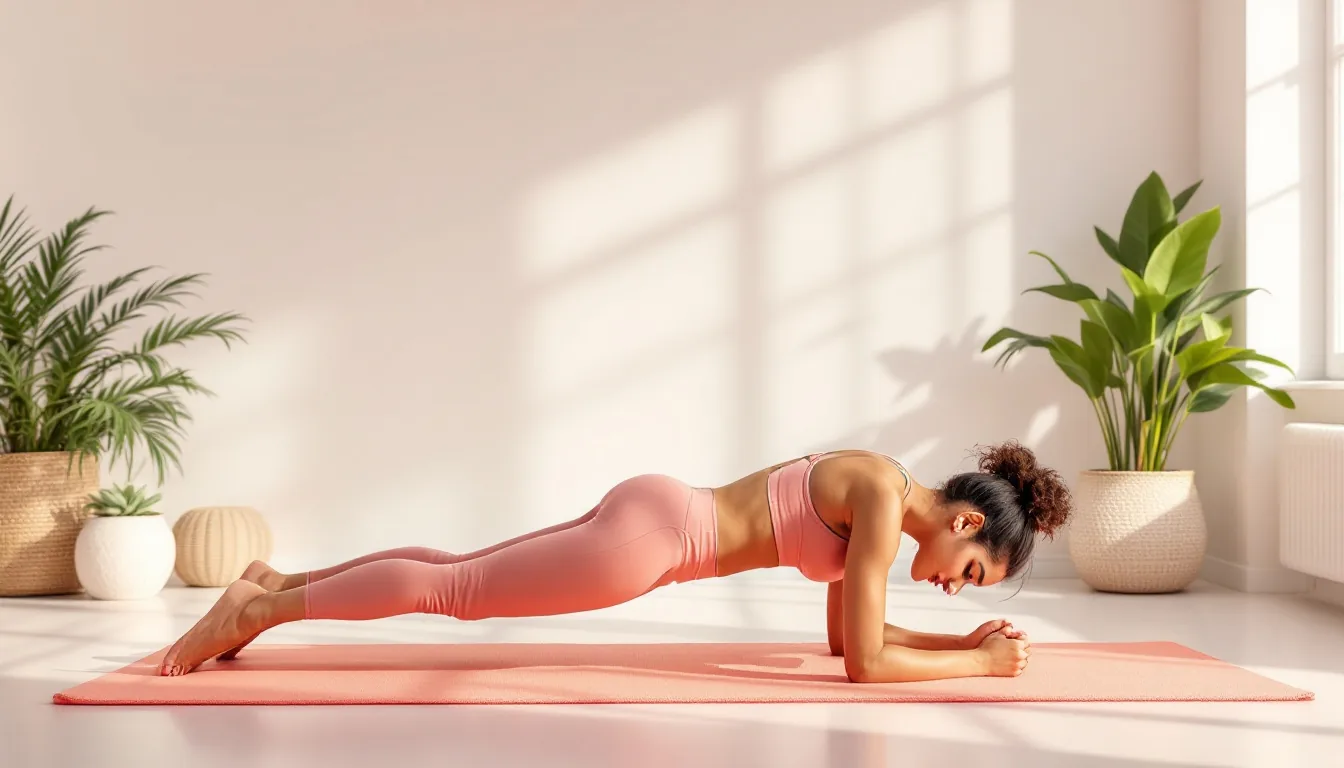
Forearm plank
Elbows under shoulders, body straight from head to heels.
- Squeeze your glutes and brace your stomach.
- Keep your hips level and breathe steadily.
Easier: plank from your knees. Harder: lift one foot at a time.
Reverse crunch
On your back, knees bent at 90 degrees above your hips. Curl your hips a few inches off the floor, then lower.
- Use your abs, not momentum.
- Lower over two to three seconds.
Easier: just tilt your pelvis. Harder: pause at the top.
Glute bridge
On your back, knees bent, feet flat. Push through your heels to lift your hips.
- Squeeze your glutes at the top.
- Keep your ribs down so your lower back doesn’t arch.
Easier: lift halfway. Harder: single-leg bridge.
Session B: sides and rotation
| Exercise | Sets | Reps or time | Rest |
|---|---|---|---|
| Side plank | 2–3 | 15–40 sec each side | 30 sec |
| Bird dog | 2–3 | 6–10 each side | 30 sec |
| Bicycle crunch | 2–3 | 8–12 each side | 30 sec |
| Plank shoulder taps | 2–3 | 8–12 each side | 30 sec |
Side plank
On your side, elbow under shoulder, lift your hips into a straight line.
- Stack your hips and shoulders.
- Push the floor away with your forearm.
Easier: lift from your knees. Harder: raise your top leg.
Bird dog
On hands and knees, reach one arm forward and the opposite leg back, hold for two seconds, then switch.
- Keep your hips level.
- Reach long rather than high, and move slowly.
Easier: extend only a leg. Harder: bring elbow and knee together under your body between reps.
Bicycle crunch
Hands beside your head, bring one elbow toward the opposite knee as the other leg straightens.
- Rotate through your shoulders and keep a slow pace.
- Don’t pull on your neck.
Easier: feet on the floor, crunching across toward one knee at a time. Harder: pause at each twist.
Plank shoulder taps
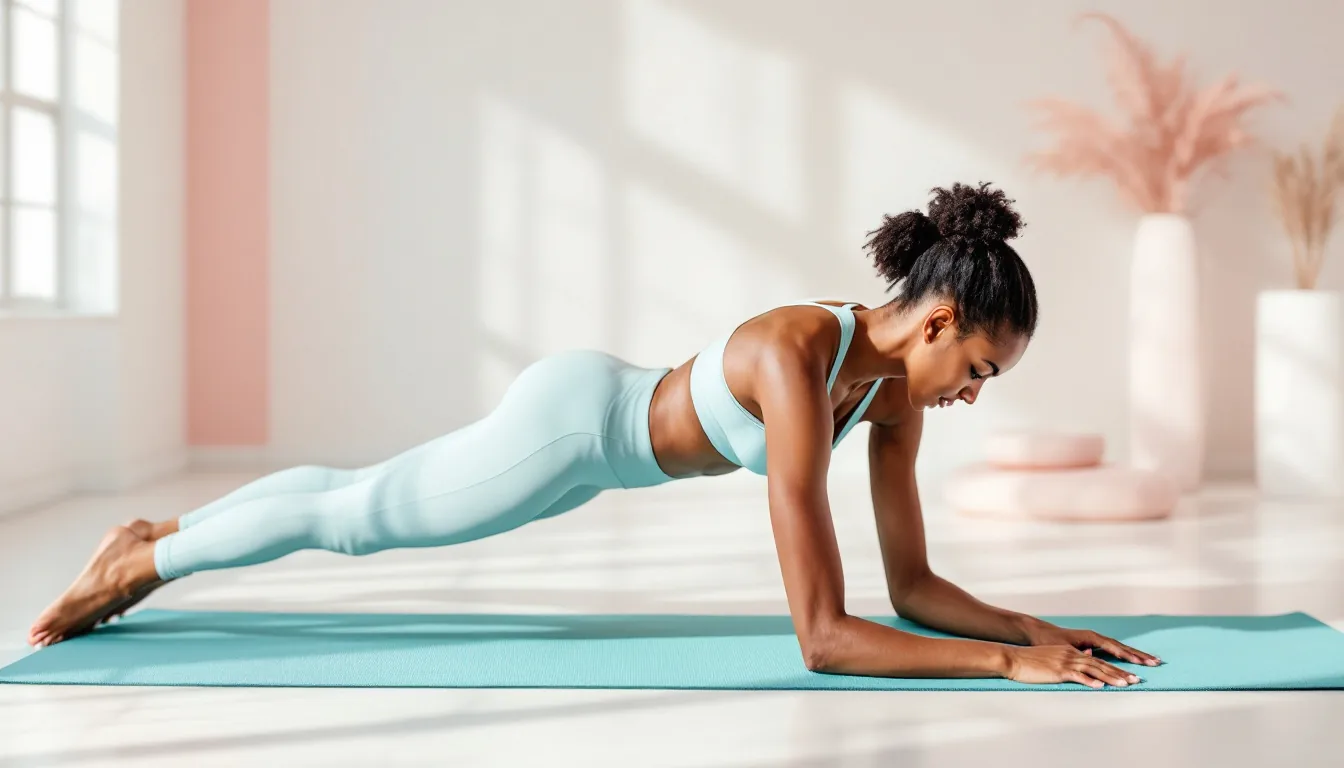
From a high plank with feet wide, tap one hand to the opposite shoulder, then switch.
- Keep your hips still, without rocking side to side.
- Tap slowly.
Easier: do it from your knees or with hands on a bench. Harder: bring your feet closer together.
Week-by-week progression
- Week 1: 2 sets at the lower end of the reps or time. Use easier options freely.
- Week 2: 2 sets at the top of the range, standard versions.
- Week 3: 3 sets at the lower end of the range.
- Week 4: 3 sets at the top of the range, with one or two harder options.
If a week feels too hard, repeat it. Progress is still progress.
If you’re pregnant, recently postpartum or have back pain, check with your doctor or a physical therapist before starting. If you have diastasis recti, Cleveland Clinic advises avoiding crunches and planks until a physical therapist guides you. Stop any move that causes pain, leaking or pelvic heaviness.
After day 30
Keep core work in your routine 2–3 times a week rather than stopping. For overall health and gradual fat loss, the NHS recommends at least 150 minutes of moderate activity a week and strength work for all major muscle groups on at least 2 days.
FAQs
What if I miss a day?
Pick up where you left off. Don’t double up sessions to catch up; just push the calendar back a day.
Can I do this alongside my usual workouts?
Yes. Add the session to the end of a strength or cardio workout, and swap any walk day for other cardio you already do.
Should I start the challenge again after 30 days?
You can, using your day-30 times as your new baseline and the harder options from the start.
Sources
General information only, not medical advice. Stop if you feel pain, dizziness or shortness of breath, and check with a health professional before starting if you have any concerns.